

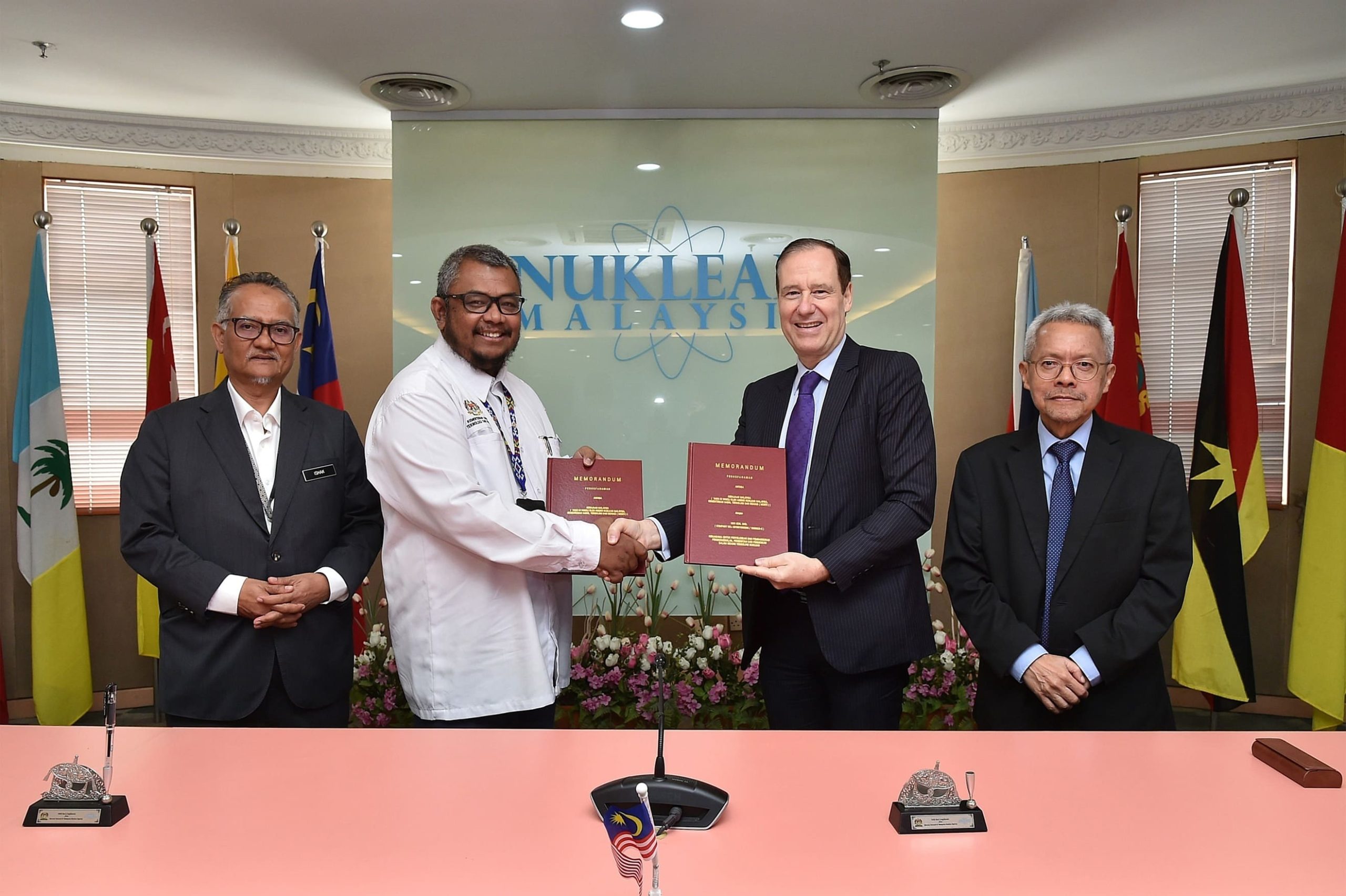
In a move to propel Malaysia’s standing in high-impact science, the University of Cyberjaya (UoC) and the Malaysian Nuclear Agency (Nuklear Malaysia) have signed a landmark Memorandum of Understanding (MoU). This strategic partnership is designed to bridge the gap between academic theory and national industrial application, focusing on nuclear science, research innovation, and specialized talent development.
The collaboration targets three critical pillars of the digital and green economy: Healthcare, Biosciences, and Environmental Studies.
Advanced Research & Diagnostics
The partnership will drive applied research in fields that are becoming increasingly vital as Malaysia scales its medical infrastructure:
- Radiopharmaceuticals: Developing advanced applications for medical treatment and diagnostics.
- Advanced Diagnostics: Leveraging nuclear technology to improve healthcare outcomes.
- Environmental Monitoring: Utilizing nuclear science to track and maintain environmental sustainability.
Building the “Future-Ready” Talent Pipeline
Echoing the “Sovereign Intelligence” theme seen across Malaysia’s tech sector, this MoU prioritizes the cultivation of high-value human capital:
- Industrial Training: Structured internship pathways for UoC students at Nuklear Malaysia’s facilities.
- Postgraduate Excellence: Joint supervision for Master’s and PhD candidates, ensuring research is aligned with national priorities.
- Commercialisation: A focus on translating laboratory research into market-ready innovations that contribute to the broader innovation ecosystem.
3. Closing the “Execution Gap”
The formalisation of this partnership builds on a history of student attachments and joint publications. By formalising the bond, both institutions aim to accelerate the “lab-to-market” pipeline.
“This collaboration bridges a longstanding gap between academia and practice,” said Professor Dr. David Whitford, Vice-Chancellor of UoC. Dr. Muhammad Rawi Mohamed Zin, Director General of Nuklear Malaysia, added that developing skilled talent is essential for the nation’s long-term growth in research and innovation.
Editor’s Take: The Infrastructure of Innovation
For the Malaysian Business reader, the UoC-Nuklear Malaysia partnership is a vital piece of the RM426.7 billion investment puzzle. While CIMB tokenises the capital and NanoMalaysia builds the graphene foundations, UoC is securing the specialized talent required to operate high-tech sectors.
Nuclear science isn’t just about energy; it is the backbone of modern cancer treatment, food security, and advanced materials. As Malaysia positions itself as a regional hub for high-value innovation, having a workforce that can navigate nuclear applications gives the nation a competitive edge in the global “Sovereign Intelligence” race.