

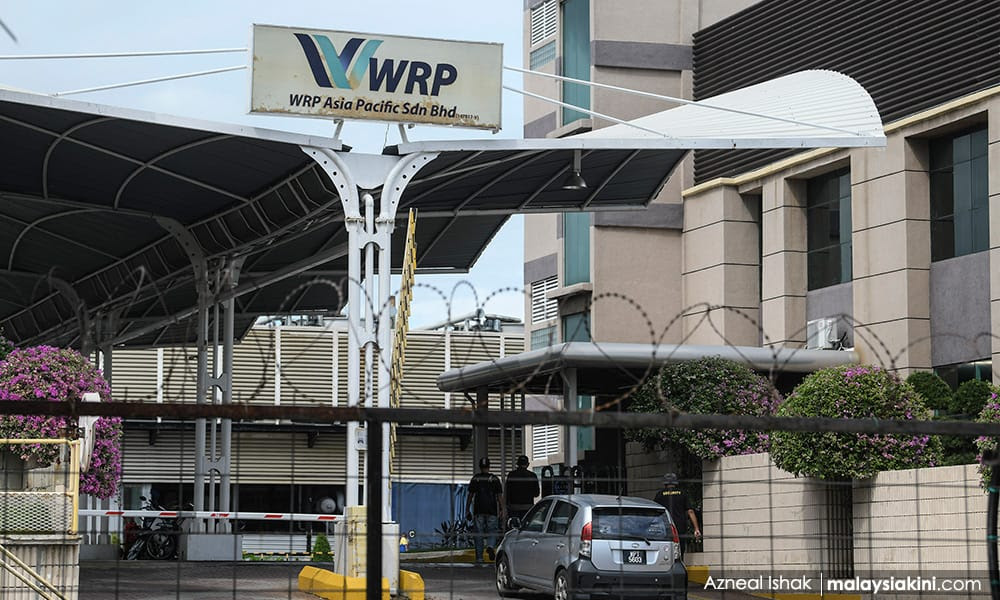
Forced labour ban, RM140M alleged CEO fraud, 70% butadiene shock — how a 41-year glove empire supplying the NHS and 200 countries ended in 4,000 layoffs.
The Rise of WRP Asia Pacific Founded by Tan Sri Ibrahim Mohamed in 1985, WRP Asia Pacific was a Malaysian premium rubber glove and urology catheter manufacturer that sold barrier protection to hospitals and distributors across the globe.
Founders’ Story
WRP started as Wembley Rubber Products in Sepang, Selangor, back in 1985. Tan Sri Ibrahim Mohamed was a veteran Malaysian industrialist, and he saw two things colliding at the time — the AIDS crisis sending global demand for medical gloves through the roof, and Malaysia pushing hard to dominate the world’s rubber downstream industry. The bet was simple → build premium medical gloves that Western hospitals could trust, and ride the wave of global healthcare demand for decades.
- The Problem -Hospitals and distributors worldwide needed reliable barrier protection, but supply was messy and inconsistent.
- The AIDS crisis had sent demand for medical gloves skyrocketing in the 1980s
- Existing suppliers struggled with pinholes, contamination, and quality variance that put healthcare workers at risk
- Developed-market buyers like the NHS and US hospitals needed FDA-compliant, pinhole-free gloves at massive scale
- The Solution – WRP built a premium manufacturer of latex and nitrile gloves, plus specialty medical devices like urology balloon catheters.
- Proprietary dipping processes and compounding formulas for consistency
- FDA QSR, ISO 13485, and CE Mark certifications that unlocked developed-market buyers
- OEM manufacturing for big brands plus its own Dermagrip label sold worldwide
In short, WRP made the gloves that protected the world’s healthcare workers — and built a global empire on it.
By 2005, the company had hit a rough patch financially.
That’s when the founders brought in Datuk Lee Son Hong (the former CEO of rival APL Industries, who’d just sold APLI to Supermax) to run a turnaround.
And it worked. Kind of.
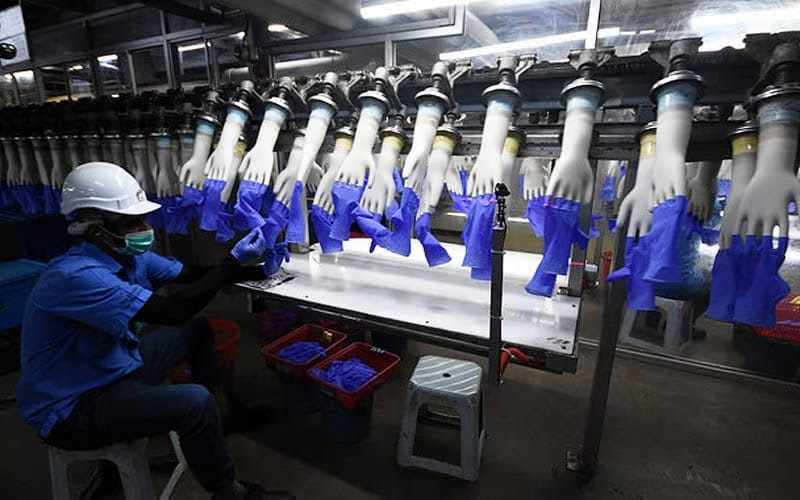
Under Lee, WRP roared back to life. Net profit jumped to RM38.6 million in 2009, and revenue peaked at RM491 million in FY2010. By then, WRP was running 44 production lines, churning out 3.65 billion gloves a year, and exporting to 48 countries.
In 2011, they drafted an IPO prospectus to list on Bursa Malaysia as “WRP World Bhd”. The listing was shelved, but private equity came knocking instead — TAEL Partners entered in October 2013 via master tawarruq facility agreements, bringing institutional money in.
At its peak, WRP:
- produced 11 billion gloves per year across 69 production lines in 3 factories
- held roughly 12% of the US sterile surgical glove market
- represented about 5% of Malaysia’s entire glove manufacturing capacity
- employed over 4,000 people with distribution offices in the US, Austria, Costa Rica, and UAE
- was supplying hospitals across nearly 200 countries (including the UK’s NHS)
From a single Sepang factory to one of the world’s largest premium glove makers. On paper, WRP had built exactly what Tan Sri Ibrahim set out to build.
But the way they got there was about to catch up with them.
The Fall of WRP Asia Pacific
Then on 9 December 2018, The Guardian dropped a story bomb.
According to The Guardian’s investigation, WRP, one of the suppliers making rubber gloves for Britain’s NHS, was alleged to be running on forced labour. The Guardian reported allegations of debt bondage, passport confiscation, excessive overtime, and wages withheld for months. The paper also reported 3,000 workers packed into dorms built for 1,800, and factory floors said to reach 70°C. WRP denied the allegations at the time.
What followed was six years of escalating crisis — strikes, bans, a boardroom war, criminal charges. And then, right when it looked like they might survive, one final shock that broke everything.
Here’s what happened to WRP Asia Pacific:
It’s been three months already and we have had no pay, it is very very hard. I can’t send the money back to my family who need it. They are asking me where it is.
– shared by one Nepalese worker at WRP
Your Partner in Protection
- 28 Nov 1985 — Wembley Rubber Products incorporated in Sepang, Selangor.
- Mar 1998 — Renamed to WRP Asia Pacific Sdn Bhd, adopted the slogan “Your Partner in Protection”, and picked up a majority stake in US-based WRP Corporation.
- 2005 — Datuk Lee Son Hong joined as CEO to run a turnaround, fresh from selling rival APLI to Supermax.
- 2010 — Peak financial year. Revenue RM491 million, net profit RM35.7 million, exports to 48 countries.
- 2011 — Draft IPO prospectus filed for “WRP World Bhd” on Bursa Malaysia. But the listing was shelved.
- 29 Oct 2013 — TAEL Partners entered via master tawarruq facility agreements, bringing institutional private equity in.
When the US said no
- 9 Dec 2018 — The Guardian exposed forced labour allegations at WRP — debt bondage, passport confiscation, wage withholding. CEO Lee denied it all.
- Jan 2019 — Around 2,000 Nepali workers went on a 3-day strike over three months of unpaid wages.
- 30 Sep 2019 — US Customs and Border Protection issued a Withhold Release Order banning WRP gloves from the US over forced labour concerns. WRP just lost its largest market.
- 30 Dec 2019 — Kuala Lumpur High Court appointed an interim liquidator. Lee Son Hong was ousted as CEO.
- Early Jan 2020 — TAEL Partners injected emergency funds of RM25.25 million over two rounds to pay overdue salaries and fund a turnaround team. Workers reportedly received only RM500 each, paid in cash from briefcases brought into the factory under security.
- 23 Mar 2020 — US CBP revoked the WRO after WRP agreed to roughly US$5.4 million in remediation for about 1,600 migrant workers.
WRP donated 500,000 gloves to Malaysia’s Ministry of Health the same day. - May 2020 — All 69 production lines reactivated, just in time for the COVID-19 glove boom.
- 24 Nov 2020 — Former CEO Lee Son Hong charged with 8 counts of Criminal Breach of Trust totalling RM131.85 million, plus 3 counts of false claims totalling RM8.4 million. His wife was charged with abetment. Both pleaded not guilty.
Forensic audits had allegedly found production line purchases between 2014–2016 inflated to over twice market value, with funds funnelled to private companies. - Jun 2024 — FY ending June 2024 showed revenue of RM204.6 million and a net loss of RM78 million. The post-pandemic glove glut had crushed margins.
- 31 Mar 2026 — WRP issued a letter to global customers announcing wind-down effective 15 April, citing Middle East conflict disruptions and a ~70% surge in butadiene costs.
- 15 Apr 2026 — WRP officially ceased operations. Over 4,000 employees faced redundancy.
The forced labour scandal had cost them their biggest market. Alleged fraud by their own CEO had hollowed out the balance sheet. COVID demand gave them a brief reprieve, but it masked how weak the business really was underneath.
Then butadiene prices surged 70% on a geopolitical shock thousands of miles away — and there was nothing left to absorb it.
At the end of the day, the company whose slogan was “Your Partner in Protection” couldn’t protect itself from the mess it had built.
Want to learn more about WRP Asia Pacific’s downfall? Read all about it at The Runway Venture