

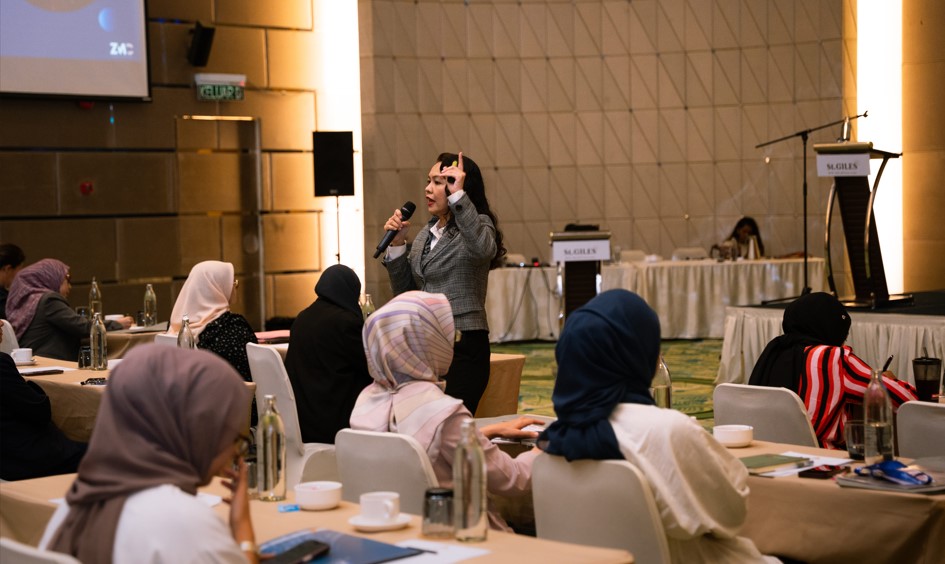
In a world where a single AI-generated deepfake or a viral stakeholder tweet can erase billions in market value in seconds, the traditional corporate “press release” is officially dead. Replacing it is a high-stakes discipline called Communication Agility, and according to experts at the Connect & Influence 2026 conference, it is the only thing standing between organizational resilience and total reputational collapse.
Speaking at The Boulevard St Giles Hotel, Zuraida Malek, a Strategic Communications and Project Management Specialist, warned that Malaysia’s record-breaking investment landscape, RM426.7 billion across 8,390 projects approved in 2025, has created a “project-driven economy” that moves faster than most leadership teams can think.
The “Approval Layer” Crisis
The core message was blunt: most organizations aren’t failing because of bad planning, but because they are too slow to talk. Zuraida noted that excessive approval layers and siloed communication act as a “clogged pipe” in the corporate engine.
“Most initiatives fail because communication collapses under pressure,” she said. In an “always-on” environment, a two-day wait for a legal department’s sign-off on a crisis statement is no longer a safety measure; it’s a liability.
Framework for the “Always-On” Era
To combat this, Zuraida introduced the Zeta M 3R Communication Agility Pillars™:
- Relevance: Ensuring the message actually matters to the stakeholder in that specific moment.
- Responsiveness: The speed and accuracy of the reaction.
- Resilience: The ability to maintain trust and legitimacy even when the organization is under fire.
She further argued that AI should be used to “scale” communication, but only human Perception Leadership can provide the judgment needed to read context and respond with humanity.
Editor’s Take: The “Sovereign Intelligence” of Trust
For the Malaysian Business reader, the RM426.7 billion investment figure from MIDA is a staggering achievement, but it comes with a hidden “Complexity Tax.” As we track RM18 billion in FDI into zones like the JS-SEZ, we must realize that these projects are not just technical feats – they are social ones.
As the Entermind “Confessions” whitepaper recently proved, Malaysia’s digital front doors (our chatbots) are already failing 50.5% of the time. If our human communication is equally rigid, we risk a total “trust deficit.” In a global economy growing at 3.1%, trust is the most liquid asset we have. Zuraida’s call for “Perception Leadership” isn’t about spin; it’s about Sovereign Intelligence ensuring that Malaysian leaders have the mental agility to outrun the algorithms.