

In the enterprise world, Artificial Intelligence is often stuck in a cycle of endless prototypes. While 92% of companies experiment with AI, recent Harvard research suggests only 5% successfully move these projects into full, value-driving production. At the recent Dataiku Summit, DigiKey, a global leader in electronics distribution, shared how they broke this cycle by applying AI to one of the most detail-oriented departments in business: Accounting.
The challenge was a massive manual backlog in payment reconciliation. With payments arriving in multiple currencies and cryptic bank notes, the accounts receivable team was facing a mountain of overtime. Instead of hiring 30 more staff members, DigiKey turned to Agentic AI to automate the interpretation of these complex financial documents.
The Strategy: From Deciphering to Decisions
DigiKey’s approach wasn’t to replace human judgment, but to narrow the uncertainty. By using Large Language Models (LLMs) to “read” cryptic bank notes and cross-check them against internal data, they created a high-velocity reconciliation engine.
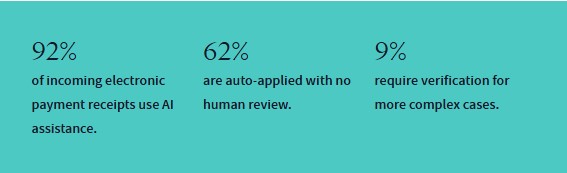
- Automated Accuracy: AI now assists with 92% of all incoming receipts.
- Human-in-the-Loop: 62% of payments are auto-applied with zero human review, while 19% of the most complex cases are routed to experts—but with the necessary context already attached by the AI.
- Operational Impact: The team effectively reduced backlogs and overtime without a massive increase in headcount, allowing staff to focus on high-value financial strategy rather than data entry.
Editor’s Take: The “Strike Team” Model
For the Malaysian Business reader, the “Alpha” in DigiKey’s story isn’t just the technology, it is the organizational structure. They used “AI Strike Teams” which consist of cross-functional groups of accounting leaders, data scientists, and engineers who worked together for months, not years, to solve a specific problem end-to-end.
This “Reform to Perform” mindset is vital for Malaysian SMEs and corporations looking to scale. Success didn’t come from a top-down IT mandate; it came from the accounting team having “skin in the game” and owning the AI solution as part of their daily workflow.
Dataiku’s original article here.