

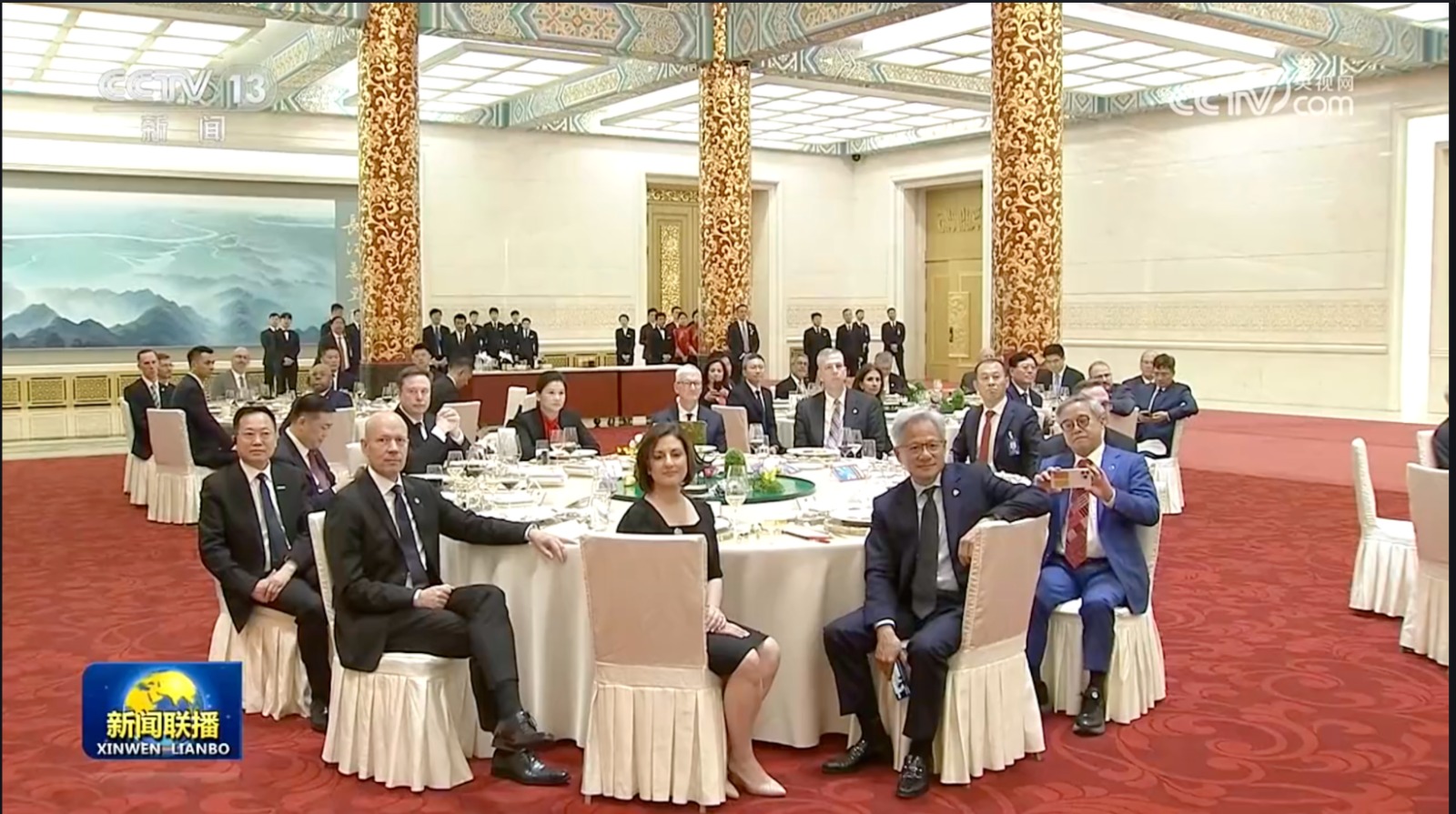
A high-profile diplomatic welcome banquet held in Beijing has drawn global tech industry attention, not for diplomatic talks, but for a meticulously composed elite tech roundtable. The exclusive gathering assembled heavyweight leaders across global high-tech tracks, forming a snapshot of the world’s most influential technology ecosystem. Attendees included Elon Musk, CEO of Tesla, Tim Cook, CEO of Apple, Jensen Huang, Founder of NVIDIA, and Tyson Jacob from an international leading tech institution. Jia Shaoqian, Chairman of Hisense Group, was the key Chinese manufacturing representative seated at this prestigious table. Beyond diplomatic etiquette, this cross-industry lineup reveals an unspoken signal: every enterprise at the table is accelerating technological iteration and reserving core competitiveness for the next industrial era.
Each participant at the elite table represents a definitive vertical track in the global tech landscape. NVIDIA, led by Jensen Huang, is the undisputed global leader in AI computing and GPU chips, providing underlying computing power for artificial intelligence, autonomous driving and high-performance data centers. Tesla, helmed by Elon Musk, dominates new energy vehicles and intelligent transportation, pushing forward intelligent manufacturing and autonomous driving technology worldwide. Apple, under Tim Cook’s governance, anchors global consumer electronics and intelligent ecosystems, commanding powerful industrial chain influence and premium brand pricing power. Tyson Jacob represents cutting-edge technological research institutions, focusing on frontier technological exploration and industrial transformation.
Compared with U.S. tech giants focusing on chips, AI and intelligent vehicles, Hisense stands as a distinctive Chinese technology player concentrating on display innovation and smart home hardware. In 2026, the company maintains steady breakthroughs on three core tracks, building unique technological moats in the consumer electronics sector. Though less hyped in the global capital market than its American counterparts, Hisense presents solid, manufacturing-oriented technological strength.
In advanced display sectors, Hisense consolidates its industrial edge with RGB-Mini LED and laser display technologies. It achieves full-chain independent research and manufacturing for RGB-Mini LED, retaining a stable one-year technological lead over peers with superior color gamut and precise light control. Meanwhile, Hisense keeps global dominance in laser display, owning complete independent intellectual property rights across optical components and terminal equipment.
Beyond displays, Hisense expands technological boundaries in home appliances. Its self-developed heat pump washing machine adopts an innovative integrated structure, enabling low-temperature fabric protection and substantial energy consumption reduction. This eco-friendly innovation reflects Hisense’s diversified R&D capability beyond traditional display businesses.
This high-end banquet builds a rare equal communication platform for transnational tech leaders. Executives exchanged views on industrial collaboration, technological innovation and global supply chain optimization. The diversified lineup covers chips, intelligent vehicles, consumer electronics and smart home manufacturing, representing the core development direction of the global technology industry.
As global industrial competition intensifies, this exclusive dinner table serves as a vivid microcosm of future tech patterns. Every enterprise present is quietly polishing its technological reserves. Moving forward, Hisense will continue to iterate its three core technologies and deepen global industrial cooperation.