

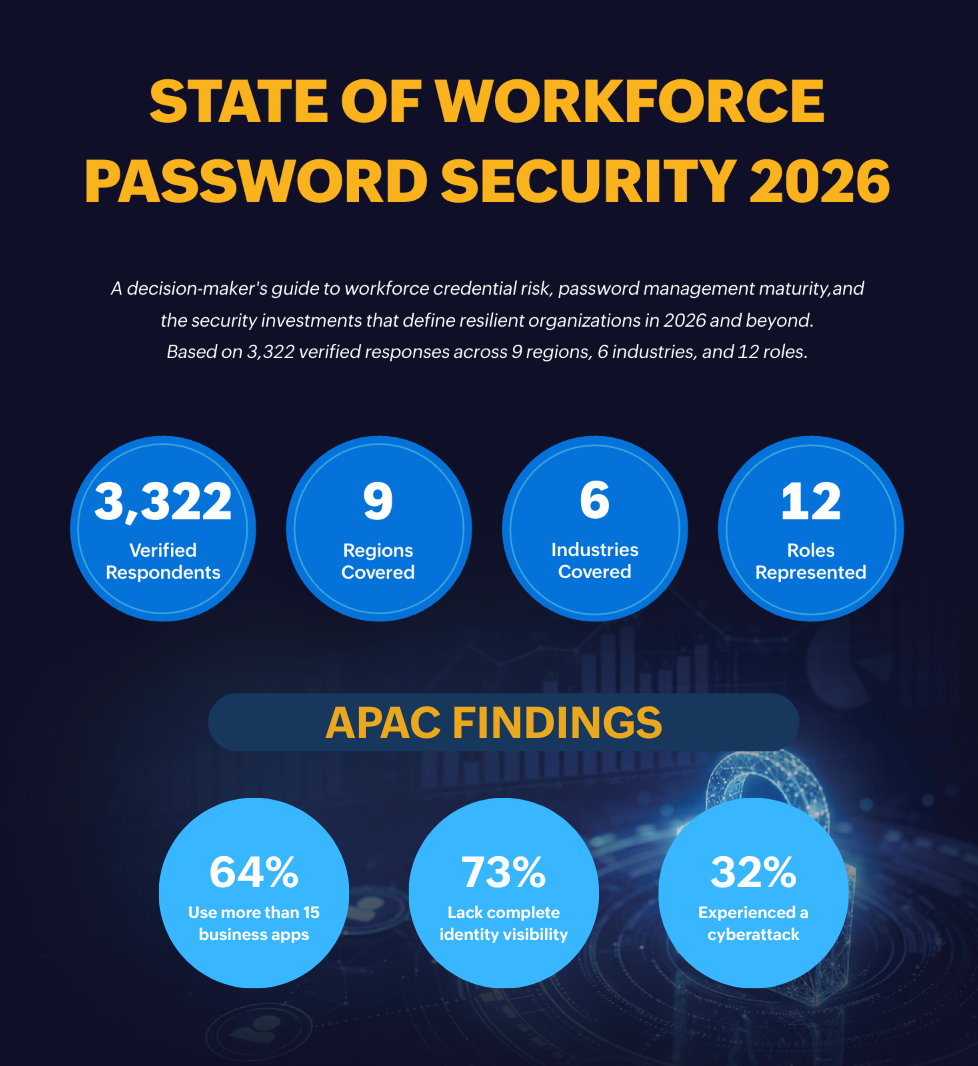
As World Password Day shifts from a commemorative event to a strategic deadline, a new global study from Zoho Corporation and Tigon Advisory Corp. reveals a dangerous “architecture-to-intent gap” in the Asia-Pacific (APAC) region. The State of Workforce Password Security 2026 report warns that application sprawl, the uncontrolled growth of business apps used by employees, is now outpacing the region’s ability to govern credentials.
For the Malaysian Business reader, the data is a stark reminder that in an era of RM426.7 billion in digital investment, our security moats are often built on shifting sands.
APAC by the Numbers: High Awareness, Low Visibility
The report, which surveyed over 3,300 respondents globally, places APAC as the region with the second-highest application sprawl in the world. The mobile-first, multi-cloud culture of ASEAN and its neighbours has created an attack surface that many IT teams can no longer see, let alone secure.
| Key Metric | APAC Finding | Strategic Implication |
| Application Sprawl | 64% of staff use 15+ apps daily. | High attack surface; “Identity fragmentation.” |
| Identity Visibility | 73% lack complete visibility. | Massive “orphaned account” risk in hybrid work. |
| Cyberattack Rate | 32% confirmed in the past year. | One in three businesses actively compromised. |
| Spending Intent | 74% plan to increase 2026 budget. | Budget is present, but architecture is lacking. |
| Zero Trust Status | 66% have not yet deployed. | Continued reliance on legacy perimeter models. |
The “SMB Blind Spot”: A Systemic Risk
In a region where Small and Medium Businesses (SMBs) form the commercial backbone, the report identifies a “credential blind spot.” More than half of organisations with fewer than 250 employees report no dedicated security team.
- Manual Hygiene: Credential management in these firms often relies on shared spreadsheets and informal policies.
- The Multiplier of Failure: As we noted in our analysis of the Multiplier Effect, a security breach at a single key SMB supplier can trigger a negative multiplier across an entire national supply chain.
The AI Paradox: Belief vs. Deployment
There is a massive “belief-to-deployment gap” regarding Artificial Intelligence. While 91% of APAC respondents believe AI will strengthen security, only 8% globally are actually ready to adopt AI-powered security today.
Chandramouli Dorai, Chief Evangelist at Zoho, notes that the constraint is not money, but architectural coherence. Legacy infrastructure (52%) and migration complexity (48%) remain the primary blockers. Without a unified foundation, AI-powered threat detection remains a theoretical luxury rather than an operational tool.
Editor’s Take: Architecture over Ornaments
For the Malaysian Business reader, the message from the Zoho/Tigon report is clear: Sequence matters. We are currently in a race to add “advanced capabilities” like AI to our businesses, yet 73% of us don’t even know which former employees still have access to our systems.
This is the “Complexity Tax” in action. As we track the Thailand Data Centre Surge and Malaysia’s own cloud ambitions, our boards must prioritise architectural simplicity. A secure, AI-ready platform is not a “future goal” but a mechanical necessity for survival in 2026. Fix your foundations before chasing the AI hype.