

Key Points of the Announcement
- Regional Hub Ambition: XTransfer, a global leader in B2B cross-border payments, plans to establish Malaysia as its regional compliance centre. This move leverages Malaysia’s mature regulatory environment and technical talent pool.
- Support for 13MP Goals: CEO Bill Deng participated in the 13th Malaysia Plan (13MP) discussions alongside Deputy Finance Minister YB Liew Chin Tong, focusing on accelerating technology to help MSMEs (Micro, Small, and Medium Enterprises) scale their exports.
- Explosive “South-South” Growth: XTransfer reported massive year-on-year growth in SME collections (2025 data) from non-traditional corridors:
- Africa: >270%
- Latin America: 94%
- ASEAN: 82%
- Solving “Scale Friction”: The firm identified that while Malaysian SMEs have high export demand, they are bottlenecked by “operational complexity”—specifically Anti-Money Laundering (AML) compliance, FX uncertainty, and payment delays.
Signals Plan to Make Malaysia Regional Compliance Hub
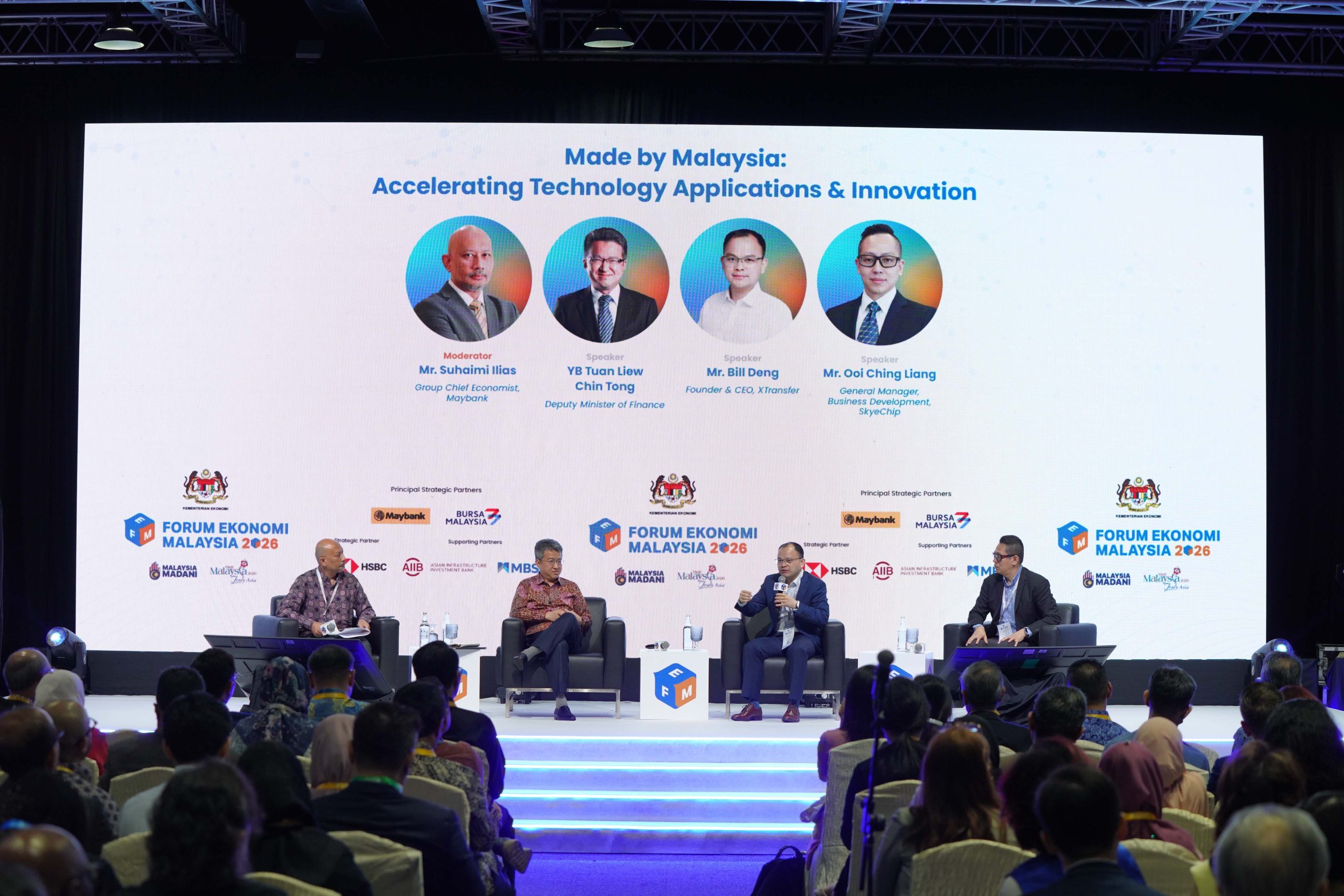
KUALA LUMPUR, MALAYSIA – Media OutReach Newswire – 11 February 2026 – XTransfer, the world’s leading B2B cross-border financial platform, was honoured to be invited to join the Malaysia Economic Forum (Forum Ekonomi Malaysia 2026). Bill Deng, Founder and CEO of XTransfer, shared insights on how Malaysia can accelerate technology application and innovation to help micro, small and medium enterprises (MSMEs) scale exports under the 13th Malaysia Plan (13MP), during FEM 2026’s panel discussion, “Made by Malaysia: Accelerating Technology Applications & Innovation”.
Bill was honoured to join YB Tuan Liew Chin Tong, Deputy Minister of Finance of Malaysia, and Mr Ooi Ching Liang, Senior Director of Engineering at SkyeChip, for a discussion focused on strengthening high-growth, high-value industries, advancing R&D commercialisation, increasing productivity and competitiveness, and supporting MSMEs in global value chains.
Drawing on XTransfer’s work with MSMEs across markets, Bill noted that many Malaysian businesses are “able to export,” but face persistent barriers to scaling exports. The most common issues are trust, compliance, and scale, which often surface as payment delays, repeated documentation requests, FX uncertainty, and working capital pressure as orders grow.
“For B2B SMEs in foreign trade, the biggest constraint isn’t demand. It’s the operational complexity behind cross-border payments, foreign exchange, and compliance,” Bill said. “In particular, AML requirements can be difficult for both traditional banks and SMEs to manage efficiently, creating friction that slows down legitimate trade.”
Bill highlighted a structural shift in global trade flows from a single dominant corridor to non-U.S., intra-Asia, and broader South–South routes. This trend is increasingly clear in real SME transaction patterns. Bill shared, “In 2025, XTransfer’s average collection amount from Asia, Africa, and Latin America grew by 106% year-on-year, with Africa exceeding 270%, Latin America reaching 94%, and ASEAN reaching 82%.”YB Liew noted the trend and thinks it is a direction Malaysia should pursue.
XTransfer also said it plans to establish Malaysia as its regional compliance centre, citing Malaysia’s strong geographic and time-zone advantages, a mature regulatory environment, availability of talent in compliance and risk operations, and cost efficiency. “Malaysia gives us the talent, governance environment, and regional proximity to scale compliance as intra-Asia and emerging-market trade accelerates,” Bill added.
Why It Matters to ASEAN
- Compliance as a Competitive Edge: By hosting XTransfer’s regional compliance centre, Malaysia sets a high bar for financial governance in ASEAN. This helps “de-risk” regional SMEs, making it easier for them to trade with strictly regulated markets in the EU and North America.
- Facilitating Intra-Asia Trade: With ASEAN trade volumes surging (up 82% via XTransfer), the region needs a “plumbing” system that doesn’t rely on Western clearing houses. A localized compliance hub speeds up “South-South” trade by processing transactions in closer proximity to the businesses.
- MSME Empowerment: MSMEs contribute over 50% of global GDP but often pay the highest fees for cross-border trade. XTransfer’s presence in Malaysia democratises “big-bank” financial tools for the smallest exporters in the region.
Editor’s Take
This is a strategic win for Malaysia’s “MADANI Economy” framework. By positioning itself as a compliance hub, Malaysia isn’t just attracting another fintech office; it is attracting financial high-ground. In the world of global trade, compliance is often where “speed goes to die.” XTransfer is essentially betting that Malaysian talent can use AI-driven tools to automate the “plumbing” of AML and risk checks faster than traditional banks. For a business magazine reader, the takeaway is clear: the most valuable export for Malaysia in 2026 might not be a physical product, but regulatory-grade trust for the entire “South-South” trade corridor.