

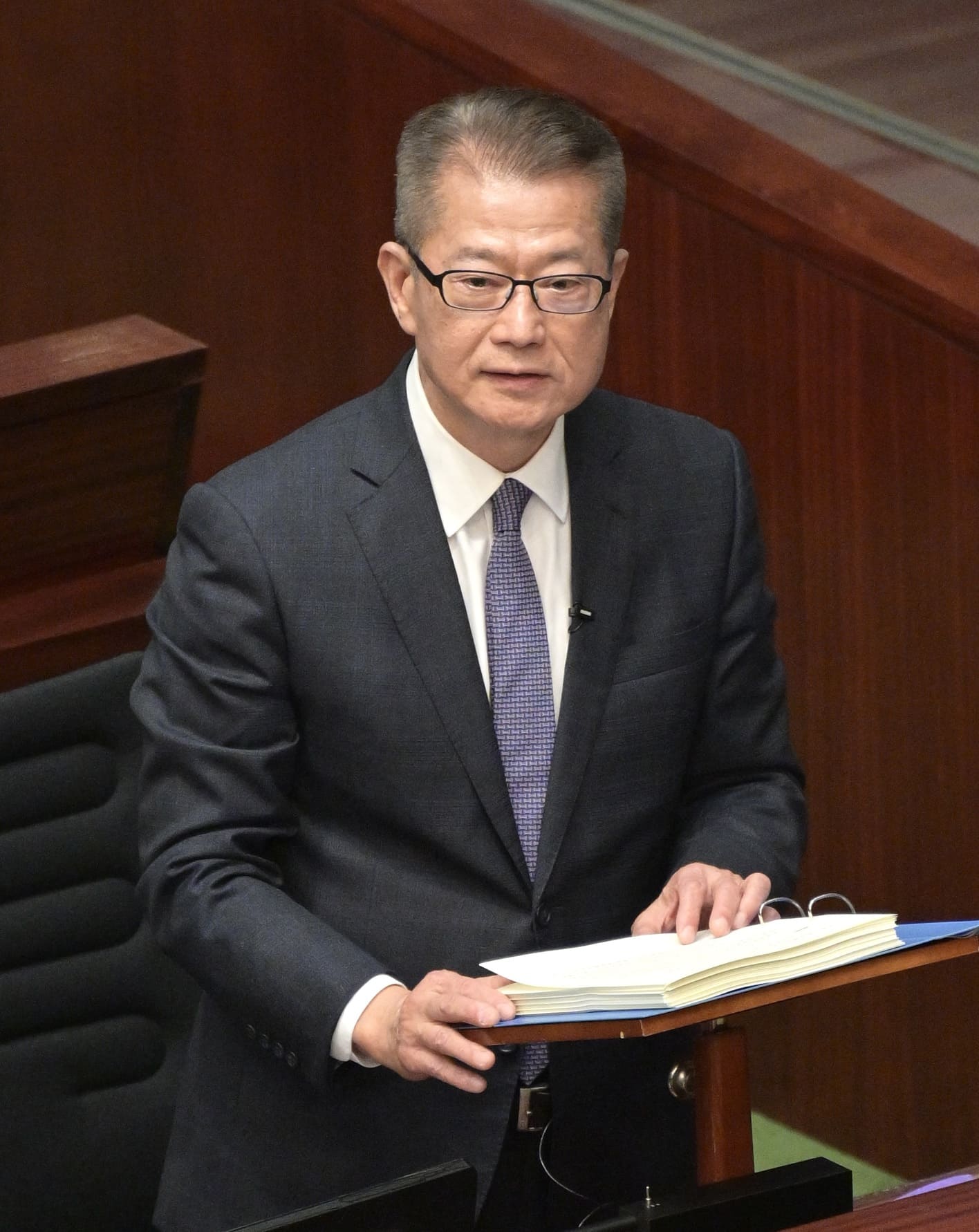
The 2026-27 Hong Kong Budget, unveiled on 25 February by Financial Secretary Paul Chan, is more than a fiscal roadmap; it is a strategic bridge to China’s 15th Five-Year Plan. For Malaysian and ASEAN businesses, this budget signals a rare alignment of regional policy that could unlock billions in cross-border “AI-to-Industrial” opportunities.
As Malaysia prepares to launch its own 13th Malaysia Plan (13MP), the synchronicity between Kuala Lumpur’s “National AI Office” and Hong Kong’s “AI+ Committee” suggests a new era of digital trade.
The Great Alignment: Hong Kong’s Budget vs. Malaysia’s 13MP
While Hong Kong is pivoting toward “AI for Industries,” Malaysia is finalising its 13MP (2026-2030), which focuses on “Raising the Ceiling” through high-growth, high-value (HGHV) sectors.
| Feature | Hong Kong 2026-27 Budget | Malaysia 13th Plan (13MP) |
| AI Strategy | AI+ Initiative: Committee on AI+ & Industry Strategy; $100m for gov digital intelligence. | National AI Office (NAIO): Focus on becoming a regional AI hub and an “inclusive AI Nation.” |
| New Industry | Microelectronics & Aerospace: $10b I&T Industry-Oriented Fund; OASES targeting aerospace firms. | E&E & Semiconductor: Target of RM1 trillion in E&E exports; focus on high-value “front-end” chips. |
| Infrastructure | Northern Metropolis: $40b in injections/loans; San Tin Technopole for advanced manufacturing. | Digital Twin & Data Bank: National Data Bank to power AI decision-making in urban planning and logistics. |
| Human Capital | Upskill Hong Kong: Rebranding ERB to focus on AI literacy and professional retraining. | AI Literacy for Rakyat: Integration of AI modules into TVET and higher education via MyGov. |
What This Means for ASEAN: The “Super-Connector” 2.0
Hong Kong’s budget isn’t just about domestic growth; it’s a bid to remain the primary “Super-Connector” for ASEAN. By aligning with the 15th Five-Year Plan, Hong Kong is offering ASEAN firms a regulated, predictable path into the Greater Bay Area (GBA).
1. The Offshore RMB Revolution
For ASEAN traders, the budget’s plan to double the RMB Business Facility to RMB200 billion is a game-changer.
- Benefit: By reducing transaction costs for conversions between the Ringgit (MYR) and RMB, Hong Kong is facilitating a move away from USD dependency.
- Opportunity: Malaysian exporters can hedge currency risks more effectively, making trade with China smoother and more profitable.
2. The Northern Metropolis as an ASEAN Hub
The Northern Metropolis is being designed as an “Innovation and Technology Zone.” With dedicated legislation expected in mid-2026 to speed up approvals, Malaysian developers and I&T firms can participate in Public-Private Partnerships (PPP) to build the physical and digital infrastructure of this new city.
Opportunities for Malaysian & ASEAN Startups
The 2026-27 budget creates a specific “entry point” for regional startups in three high-impact areas:
- Life & Health Tech: The establishment of the International Clinical Trial Academy in 2027 is a massive opportunity for ASEAN biotech firms. Startups in Singapore and Malaysia can use Hong Kong as a platform to conduct clinical trials that meet both international and Mainland Chinese standards.
- Aerospace & Low-Altitude Economy: With the HKEX reviewing listing requirements for aerospace firms and the launch of low-altitude logistics trials (drones/VTOL), ASEAN’s burgeoning drone-tech sector has a new capital market to tap into.
- Digital Assets: The launch of a digital asset platform by CMU OmniClear this year provides a regulated environment for ASEAN fintechs to issue Digital Bonds. This is particularly relevant for Malaysia’s Islamic Finance sector, which could pioneer “Tokenised Sukuk” on Hong Kong’s new rails.
For a Malaysian business leader, this budget is a signal to stop looking at Hong Kong as a mere “trading post.” Under the 13MP, Malaysia wants to be a digital technology producer. Hong Kong, with its $10 billion I&T Industry-Oriented Fund, is providing the venture capital and the “AI+” testing ground to help ASEAN products scale. The synergy is clear: Malaysia provides the talent and the manufacturing backbone (especially in semiconductors), while Hong Kong provides the regulatory-grade trust and the capital gates. For startups in Kuala Lumpur or Jakarta, the 2026 Hong Kong Budget is essentially an invitation to the “Big Table” of the North Asian supply chain.
Details are available from the budget website: www.budget.gov.hk