

Malaysia’s Bumiputera Vendor Development Programme (VDP) has endured for decades, but endurance is not the same as success. While it has connected thousands of SMEs to anchor companies, evidence suggests it has entrenched dependency rather than built globally competitive firms. Comparing Malaysia’s race‑based approach with ASEAN peers reveals stark differences: most countries favour broad SME empowerment, and their outcomes are often more sustainable.
Origins and Intent
The VDP was conceived in the 1980s to integrate Bumiputera SMEs into supply chains of government‑linked companies and multinationals. Anchors such as PETRONAS, Telekom Malaysia and Sime Darby were tasked with nurturing vendors through procurement contracts, training and preferential access.
The ambition was twofold: to empower Bumiputera participation in strategic industries and to build resilient supply chains that could compete globally.
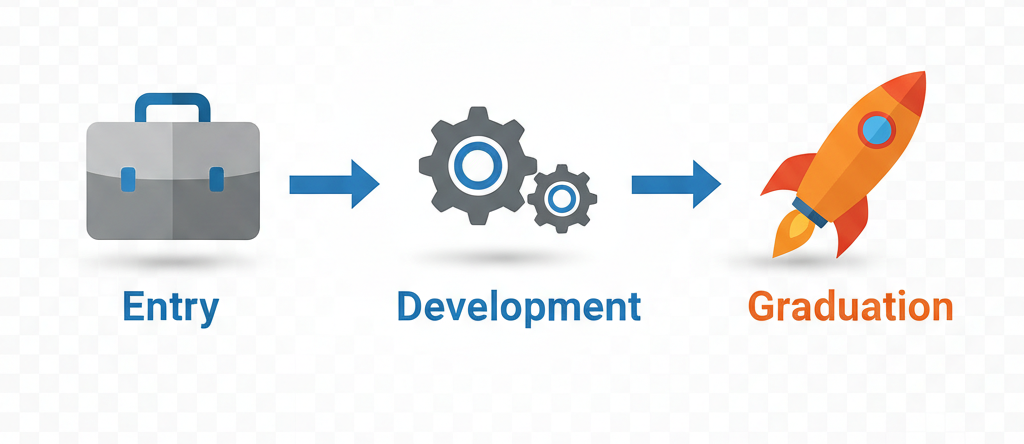
Over the years, some 40,000 vendors and 124 anchor companies have participated. Yet, as IDEAS’ Policy Paper No. 90 notes, only a fraction have “graduated” into independent, competitive firms. Between 2005 and 2015, just 88 out of 1,307 vendors graduated under the GLC Transformation Programme.
What Went Wrong: The High Cost of Patronage
While the VDP’s intent remains ideologically sound, its execution has been marred by a “compliance-first” culture that often prioritises contract disbursement over commercial viability. As Malaysia enters the first year of the 13th Malaysia Plan (13MP), four systemic failures have turned a launchpad into a gilded cage.
- The “Proxy” Leakage and Opaque Selection
Selection criteria remain the programme’s “black box.” Despite the PuTERA35 pledge for radical transparency, the lack of a public, real-time registry of vendors has allowed “Ali Baba” or proxy arrangements to persist. These entities satisfy the racial equity box on paper but outsource the actual technical work to non-Bumiputera or foreign subcontractors. The result? A hollowed-out “middleman” layer that captures the margin but fails to build the internal engineering or R&D capability required for long-term survival.
- Performance Metrics: Activity vs. Impact
Historically, the success of the VDP has been audited through a “bean-counter” lens. Government-Linked Investment Companies (GLICs) under the GEAR-uP programme have traditionally reported on the quantum of contracts—often citing the RM14 billion to RM20 billion annual procurement pool—rather than the quality of the firms.
The 2026 Reality: A recent internal audit of GLC procurement indicates that while “participation rates” are at an all-time high, the MTS (Managerial, Technical, and Supervisory) Index for these vendors has stagnated. We are creating “contract collectors” rather than “technical specialists.”
- The “Comfort Zone” Trap: Graduation Ambiguity
The term “graduation” in the VDP context is a misnomer. Without a legally mandated sunset clause, vendors often transition from one “anchor” to another—moving from PETRONAS to TNB, for instance—without ever entering the open, competitive market. IDEAS’ observation that only 6.7% of vendors graduated over a decade is a damning indictment of a system that lacks an exit strategy. In the current high-interest-rate environment of 2026, these “perpetual vendors” are increasingly seen as a “tax on efficiency” for the anchor GLCs, who must absorb the higher costs of uncompetitive bids.
- Anchor Bias and Innovation Stagnation
The “First-Mover Advantage” has become a “First-Mover Monopoly.” Existing vendors, having mastered the bureaucratic language of GLC procurement, often crowd out younger, tech-savvy Bumiputera startups. This “Anchor Bias” has stifled innovation; while the National Industrial Master Plan (NIMP) 2030 calls for AI and green-tech integration, many legacy VDP vendors remain stuck in low-value maintenance and supply roles. By favouring “stable” incumbents, the VDP is inadvertently subsidising the past at the expense of Malaysia’s digital future.
How It Can Be Improved
IDEAS offers seven recommendations to reform the VDP. Woven into the analysis, they highlight how Malaysia can shift from dependency to empowerment.
- Transparency and Data Availability
Rebuild MITI’s Vendor Information System into a standardised reporting framework. This would allow longitudinal tracking of vendors, improve transparency and support evidence‑based policy refinement.
- Systematic Lifecycle Tracking
Anchor firms currently track outcomes in silos. A centralised system would enable comparisons across sectors, identify average transition timelines and set realistic expectations for reduced dependence. Thailand’s OSMEP already does this, helping SMEs integrate into exports.
- Time‑Bound Phased Transitions
Vendors often remain indefinitely. IDEAS recommends introducing clear time benchmarks, for example three to five years, after which vendors must graduate or exit. Indonesia’s KUR scheme enforces repayment timelines, preventing prolonged dependency.
- Clarity on Graduation Expectations
Graduation must be formally defined. Is it exit from support, or reduced reliance on anchors? IDEAS suggests multiple pathways, differentiated by sector, but with clear expectations.
- Balancing Old and New Vendors
Successful graduates should not crowd out new entrants. Mechanisms must ensure renewal, so fresh Bumiputera SMEs can benefit. Vietnam’s SME Law achieves this by offering tax incentives to new entrants, preventing incumbents from monopolising support.
- Post‑Graduation Market Integration
Graduation alone is not enough. IDEAS recommends post‑graduation support, such as market access facilitation by MEDAC, to help vendors diversify and internationalise. The Philippines’ DTI provides digitalisation grants to SMEs post‑support, ensuring resilience.
- Harmonised Governance
VDP governance has shifted across ministries, creating duplication and blurred accountability. IDEAS calls for harmonised objectives, metrics and standards across agencies. With the PuTERA35 pledge to enhance monitoring, Malaysia has a timely opportunity to unify oversight. Thailand’s OSMEP offers a model of single‑agency consistency.
ASEAN Comparisons: Race‑Based versus Broad SME Programmes
| Country | Programme Type | Key Features | Effectiveness |
| Malaysia | Race-based (VDP for Bumiputera) | Anchor-vendor model, preferential access | Limited graduation, dependency risk |
| Indonesia | Broad SME empowerment | KUR (People’s Business Credit), open to all SMEs | Strong outreach, but challenges in repayment |
| Thailand | Inclusive SME policy | OSMEP supports SMEs with training, finance, export facilitation | SMEs contribute ~35% of exports |
| Vietnam | Broad SME law (2018) | Tax incentives, innovation support, no ethnic targeting | Rapid SME growth, integration into global supply chains |
| Philippines | Inclusive SME programmes | DTI-led support, focus on digitalisation | SMEs form 99.5% of businesses, strong resilience |
The VDP was born out of noble intent, to empower Bumiputera entrepreneurs. But decades later, the story is mixed. Many vendors remain tethered to anchors, unable to stand alone. Meanwhile, ASEAN neighbours have moved towards inclusive SME policies, embedding competitiveness and innovation at the core.
For Malaysia, the challenge is clear: shift from protection to empowerment, from dependency to independence. As one SME owner interviewed by The Edge put it: “We do not want handouts. We want the tools to compete.” That sentiment captures the heart of reform, turning policy into genuine empowerment rather than perpetual reliance.