

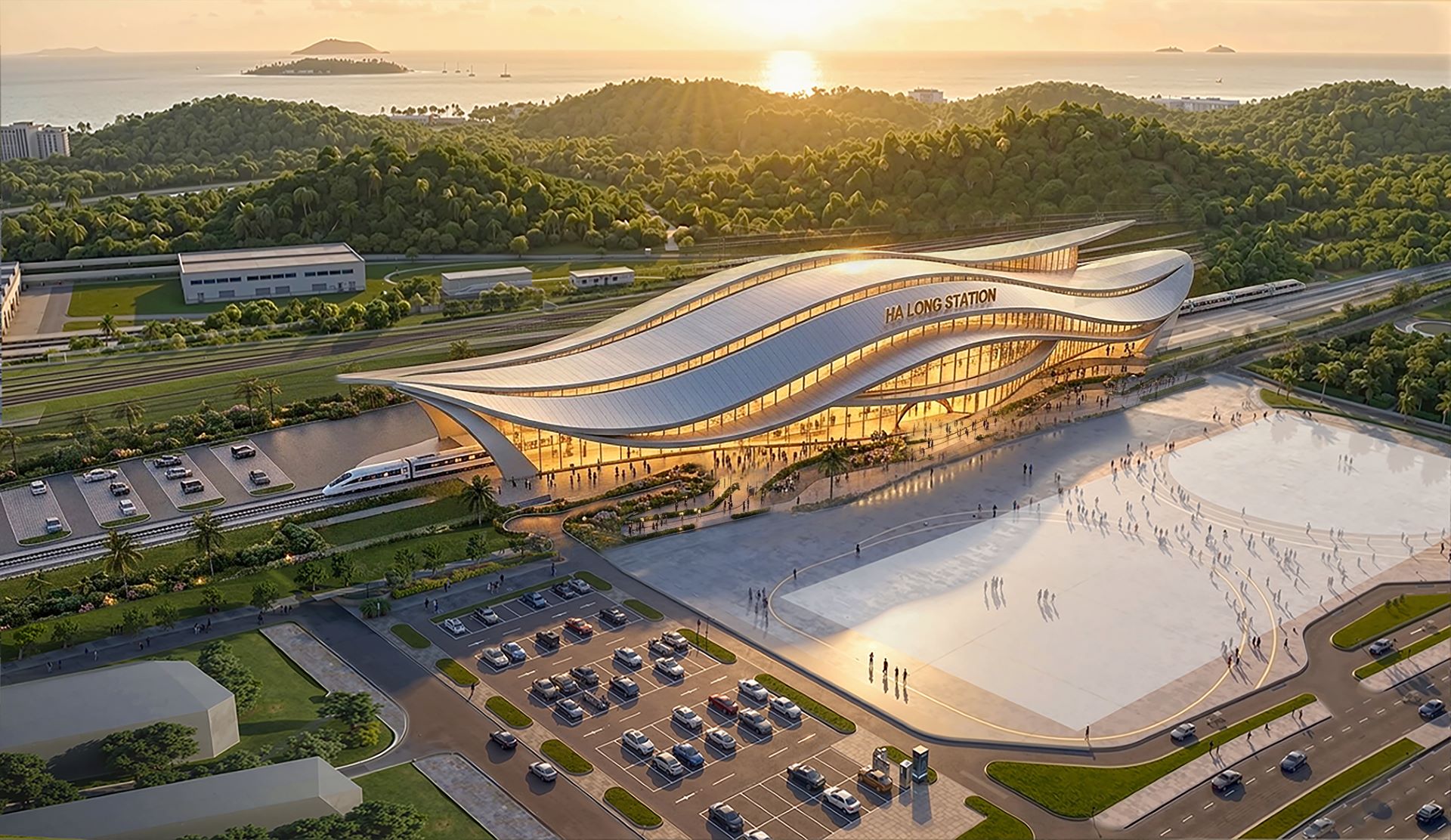
The launch of Vingroup’s VinSpeed project in Vietnam has officially turned the “High-Speed Rail” (HSR) dream into a competitive regional race. As of April 2026, the contrast between Vietnam’s rapid execution and Malaysia’s cautious revival offers a masterclass in infrastructure strategy and private-sector risk.
1. The Vingroup “Blitzscaling” Model (Vietnam)
On 12 April 2026, Vingroup officially broke ground on the Hanoi–Quang Ninh line. This project is not just a train; it is a USD 5.6 billion catalyst for the Northern Key Economic Region.
- Timeline: Construction to completion in just 32 months (Target: Late 2028).
- The Tech Edge: Partnering with Siemens Mobility, VinSpeed is using “Digital Twin” technology to build and maintain the 350 km/h fleet, ensuring a world-class safety record from day one.
- Integrated Ecosystem: By placing stations in Vinhomes Global Gate urban areas, Vingroup is subsidising the rail through high-end real estate appreciation, a model that removes the “subsidy burden” from the Vietnamese taxpayer.
2. The Malaysia “Fiscal Discipline” Model (KL–SG HSR)
While Vietnam is moving earth, Malaysia is moving through the Request for Proposal (RFP) phase. Following the revival of the project in 2023, the Anwar Ibrahim administration has maintained a strict “Zero-Government Funding” policy to protect the national debt-to-GDP ratio.
- Status (April 2026): The Cabinet is currently reviewing the three shortlisted consortia – led by Berjaya, YTL, and China Railway Construction Corp (CRCC).
- Timeline: Final agreement signing is expected by early 2027, with a target operation date likely in the early 2030s.
- Strategic Shift: Malaysia has recently joined a coordinated SEA HSR push alongside Thailand and Singapore to ensure cross-border standardisation, aiming for a unified corridor from Bangkok to Singapore.
3. Head-to-Head: The “Alpha” Metrics
| Feature | Vietnam (VinSpeed) | Malaysia (KL-SG HSR) |
| Current Stage | Construction Commenced (April 2026) | RFP/Shortlisting Phase |
| Project Owner | Vingroup (Private Entity) | MyHSR Corp (Gov) + Private Consortium |
| Investment | USD 5.6 Billion (VND 147T) | Estimated USD 15–20 Billion |
| Design Speed | 350 km/h | 320–350 km/h |
| Primary Goal | Connecting the Northern Economic Hub | Revolutionising the Southern Corridor |
| Completion | 2028 (Projected) | 2030-2033 (Projected) |
4. Impact on FDI Confidence
According to the Kearney 2026 FDI Confidence Index, both Malaysia (21st) and Thailand (20th) have returned to the Top 25, while Vietnam continues to attract record billions in “High-Quality FDI”.
The country that delivers a functional HSR first will gain the “Resilience Premium.” Vietnam’s 23-minute link between Hanoi and Ha Long is designed to attract tech manufacturers who need to move talent and high-value components instantly. For Malaysia, the RTS Link (Opening 2026) will provide an immediate boost, but the long-term crown depends on the KL-SG HSR becoming the “logistics spine” of the ASEAN digital economy.