

Strategic Takeaways
- The Unified Academic Front: The agreement brings together five major technical public universities under the CAuto umbrella: UMPSA, UTHM, UTeM, UniMAP, and UTM, creating a standardized, nationwide talent reservoir for the automotive sector.
- The Structured MRI3 Mandate: Operating under the Ministry of Higher Education’s Research and Industry-Infused Incubator (MRI3) framework, the program provides structured work-based learning (WBL), fully sponsored final-year research projects, and competitive allowances.
- The Supply Chain Localisation Goal: Backed by MIDA, the initiative builds reliable career pathways within the domestic automotive ecosystem, directly matching local workforce capabilities with the strict requirements of incoming global EV brands.
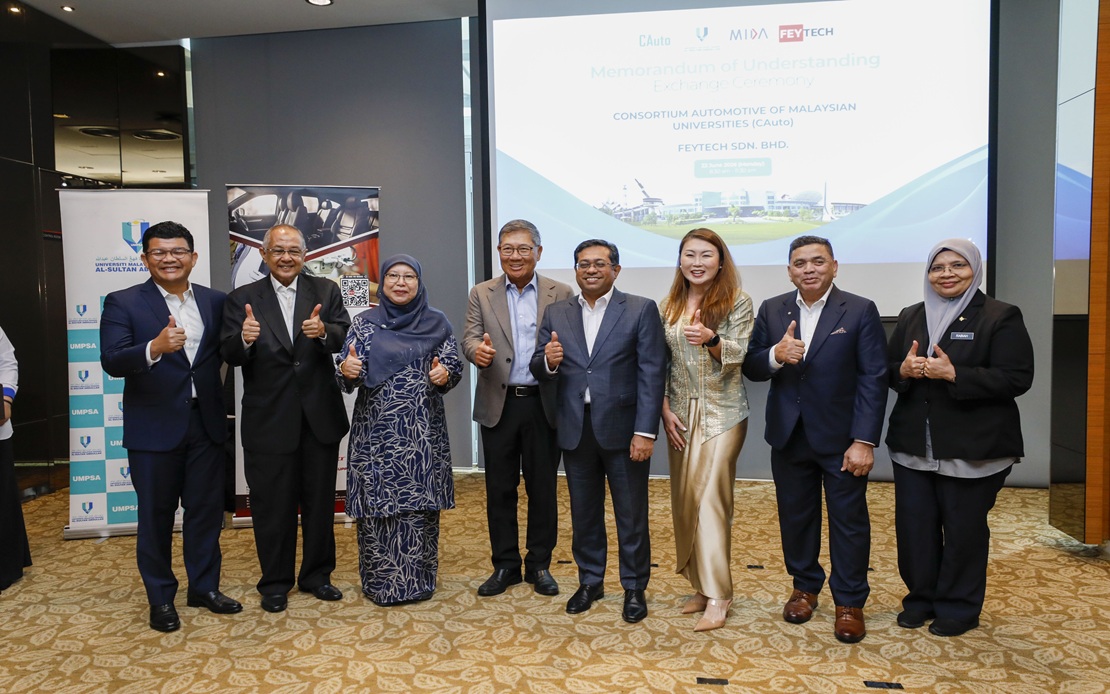
Securing the high-skill technical workforce needed to drive Malaysia’s electric vehicle (EV) transition, automotive interior giant Feytech Holdings Berhad (Feytech) has finalized a milestone Memorandum of Understanding (MoU) with the Consortium Automotive of Malaysian Universities (CAuto).
The agreement, witnessed by the Malaysian Investment Development Authority (MIDA), establishes an industry-first multi-university talent pipeline designed to feed advanced manufacturing plants.
The multi-tiered alliance addresses a major challenge within Productivity Realism: attracting high-value foreign direct investment (FDI) in advanced manufacturing is entirely useless if the local talent pool lacks the specialized technical skills needed to run next-generation production lines. Led by Universiti Malaysia Pahang Al-Sultan Abdullah (UMPSA), CAuto unifies five top public technical universities into a single academic front.
By tying this network directly to Feytech’s smart factories, the partnership ensures that local engineering graduates are trained on actual production-line automation, advanced materials handling, and EV component integration before entering the job market.
Dissecting the Enterprise Training Loop: Bridging Classroom Theory with Smart Factory Execution
The collaborative framework redefines how technical public universities align their curriculum with the rapid shifts taking place on modern factory floors:
- 1. Eliminating Training Latency via Work-Based Learning: Rather than leaving graduates to face steep learning curves after university, the MRI3 setup integrates commercial production protocols straight into the academic path. Students work directly with advanced manufacturing systems, co-develop final-year projects targeted at real assembly bottlenecks, and learn how to manage automated equipment while completing their degrees.
- 2. Preparing the Workforce for AI-Integrated Production: As Connie Go, CEO of Feytech, points out, factory lines are changing fast: “This partnership with CAuto ensures we’re not just meeting today’s workforce needs but preparing students for the AI-integrated smart factories and EV production environments of tomorrow.” This forward-looking approach helps the manufacturer protect its production capacity against localized skill shortages.
Editor’s Take: Anchoring Industrial Resiliency via Productivity Realism
From the strict view of industrial economics and Productivity Realism, Feytech’s joint partnership with CAuto highlights an essential rule for advanced manufacturing ecosystems: enduring supply chain resilience and high manufacturing margins belong entirely to operators that systematically treat talent development as an integrated capital investment rather than a passive HR cost center. For too long, industrial players have relied on uncoordinated local graduate placement programs or expensive foreign talent pools, overlooking how slow onboarding times, widening technical skill gaps, and high staff turnover disrupt production line optimizations, lower component assembly quality, and leave factories exposed during sudden technology shifts.
True manufacturing leadership requires treating university networks as vital machinery for human development.
By building multi-university pipelines that immerse engineering students in real production workflows, forward-thinking manufacturers show how to secure a reliable supply of future-ready technical staff.
This disciplined focus on workforce readiness serves as an excellent guide for regional business leaders as they upgrade manufacturing operations to capture emerging EV markets and maintain a sharp competitive edge.