

Strategic Takeaways
- The Dual-Cohort Mobilization: The USD 21 billion pipeline is divided into two operational phases. The initial phase cleared deep regulatory backlogs for 76 mature projects valued at USD 14.4 billion. Today’s announcement initiates the second cohort: 25 high-impact projects from 23 global corporations, totaling USD 6.7 billion.
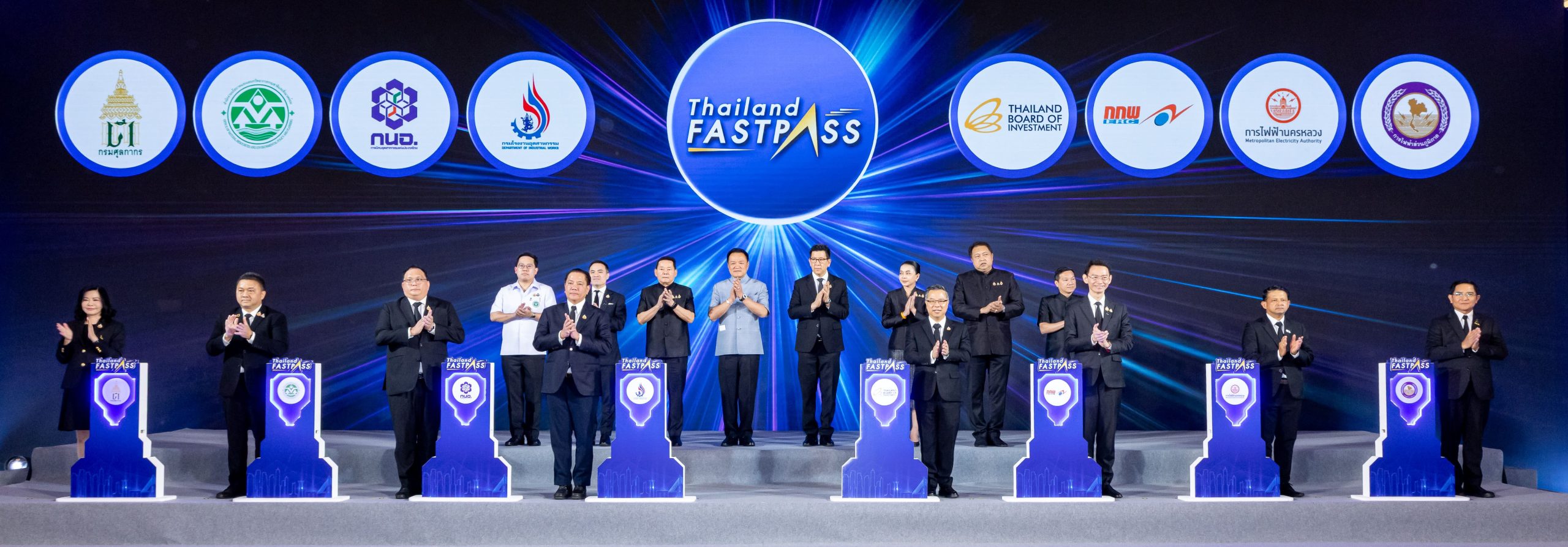
- The Multi-Agency Unified Front: The signed Memorandum of Understanding (MOU) legally binds eight distinct agencies—including the BOI, the Industrial Estate Authority of Thailand (IEAT), the Customs Department, and the national electricity authorities—to hard, accelerated targets for factory permits, environmental impact assessments (EIAs), and grid connectivity.
- The High-Skill Employment Injection: Led by Deputy Prime Minister and Minister of Finance Ekniti Nitithanprapas, the second pilot cohort is mathematically modeled to inject over 13,000 highly skilled technical roles directly into the local workforce, driving wealth distribution across five structural dimensions.
Redefining the regional race for high-value supply chain dominance, the Royal Thai Government has launched Thailand FastPass, an integrated state mechanism designed to clear regulatory bottlenecks for over USD 21 billion (approximately 700 billion baht) in high-tech corporate investments.
Formally introduced at Government House by Prime Minister Anutin Charnvirakul, the initiative directly addresses a core reality of global trade: in a world reshuffling its manufacturing baseloads, the ultimate competitive advantage is speed to operational readiness.
The strategic pivot comes on the heels of an unprecedented investment surge. Thailand’s Board of Investment (BOI) logged a historic USD 54.5 billion in applications across 2025, with another USD 30.3 billion streaming in during the first quarter of 2026 alone.
Recognizing that massive approval pipelines are economically meaningless until factories begin physical operations, the FastPass framework links eight powerful government entities into a single parallel pipeline. By slashing permitting timelines by up to half, Thailand is transforming its state apparatus from a traditional gatekeeper into an active industrial accelerator.
Dissecting the Industrial Pipeline: Turning Sovereign Policy into Factory Floor Production
The program targets deep structural transformation across highly complex sectors where time-to-market dictates survival:
- 1. Synchronizing the Semiconductor and Precision Supply Lines: High-density printed circuit board (PCB) and precision semiconductor component manufacturers—such as Advanced Connection Technology and Malaysia-based SAM Precision—rely on ultra-tight deployment windows. By compressing factory licensing delays, FastPass allows these firms to meet aggressive global tech supply deadlines.
- 2. Anchoring Next-Gen Aerospace and Clean-Tech Infrastructure: The initiative successfully pulls advanced engineering players into the Thai ecosystem, ranging from low-Earth orbit space vehicle pioneers like Equatorial Space to sustainable polymer recyclers like U.S.-based PureCycle Technologies. These entries are supported by on-site showcases of local humanoid robotics and advanced LiDAR systems.
Editor’s Take: Driving Regional Competitiveness via Productivity Realism
From the strict analytical perspective of macroeconomic policy and Productivity Realism, the launch of Thailand FastPass highlights an unyielding corporate truth: long-term regional competitiveness belongs exclusively to states that treat regulatory efficiency as an elite infrastructure asset rather than a simple administrative task. For too long, developing ASEAN economies have measuring success by the raw size of their initial investment pledges and promotional applications, overlooking how lengthy environmental impact reviews, fragmented municipal utility sign-offs, and disjointed cross-agency handoffs serve as hidden taxes that drain investor patience and delay market returns.
True economic leadership requires a deliberate shift from passive regulation to active industrial facilitation.
By tying eight powerful, disconnected state entities to a single, high-velocity parallel pipeline, Thailand’s leadership is proving how to drastically lower the execution risk facing global corporations.
This disciplined focus on clearing operational bottlenecks serves as an essential case study for business strategists looking to insulate complex hardware networks, secure domestic supply linkages, and protect cross-border corporate footprints.