

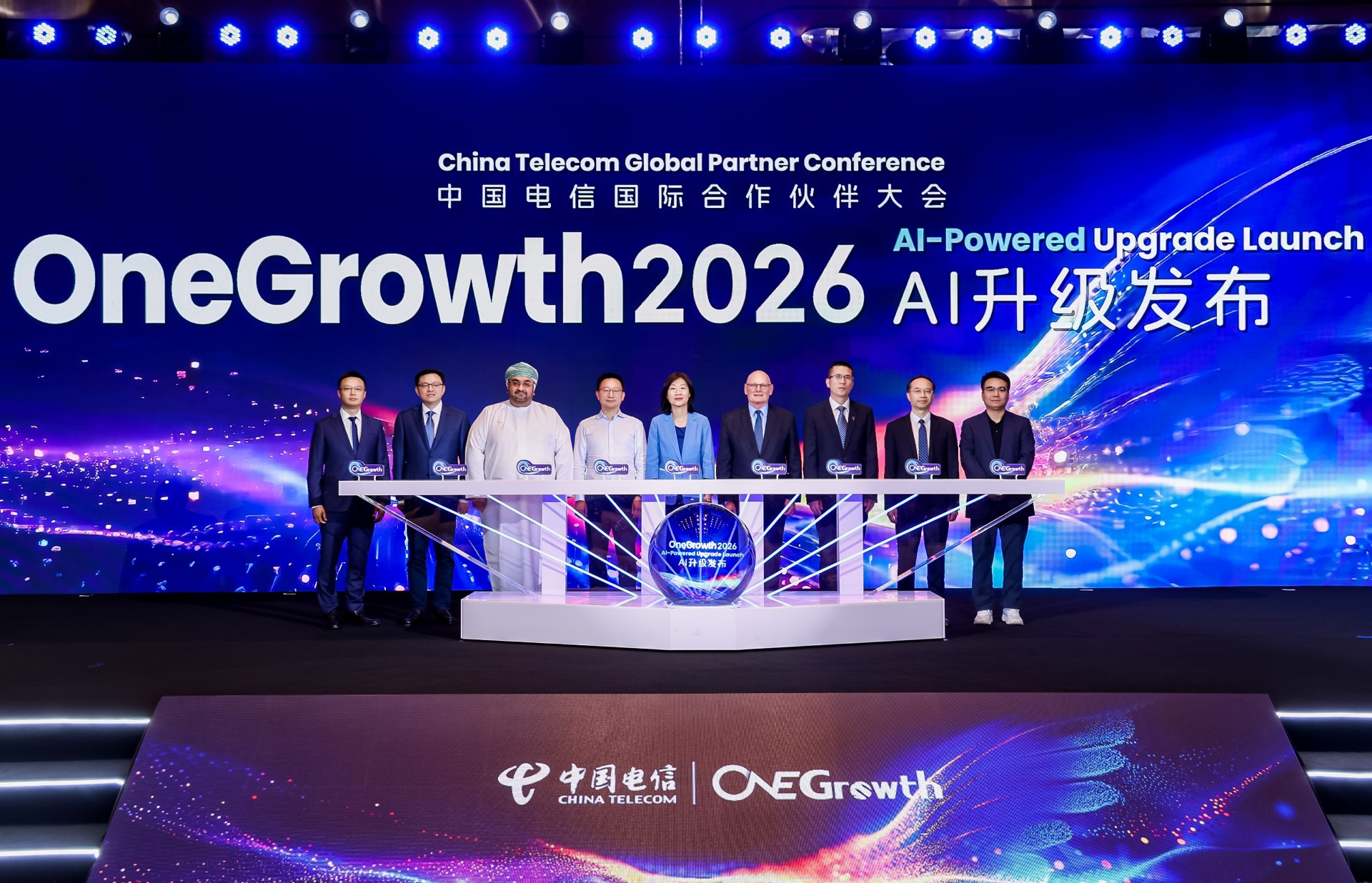
Key Takeaways
- Strategic Shift to AI Tokens: China Telecom has formally pivoted its global strategy toward an “AI Token” operating framework, aiming to establish unified, cross-border token service standards alongside the GSMA.
- Aggressive Infrastructure Expansion: The upgraded “2+5+X” global Artificial Intelligence Data Centre (AIDC) layout now commands 185 submarine and terrestrial cables with a total capacity exceeding 304 Terabits (T), anchored by the recent ALC cable landing in Hong Kong.
- Mass-Market AI Deployment: Through its new XINGCHEN TokenHub platform, the carrier is commercialising vision networks, IoT eSIM tracking across 230 countries, and lightweight quantum security tools across the Asia-Pacific region.
Global Infrastructure and Sectorial Footprint
China Telecom’s upgraded framework splits its tech deployment across four core industrial pillars, supported by an extensive regional network layout.
| AI Pillar | Key Technology | Regional Footprint | Real-World Impact |
| AI+ New Connectivity | XINGCHEN TokenHub & TeleAgent | Global Cloud Nodes (230+) | One-click access to over 300 mainstream large language models for enterprise and SME clients. |
| AI+ Vision Network | OmanEye & Seelink Platforms | Oman, UAE, Hong Kong, Asia-Pacific | Over 10 active deployment scenarios using standard gateway operations for overseas telcos. |
| AI+ IoT | Mature eSIM Architecture | 230+ Countries & Regions | Connected over 30 global automotive enterprises under a joint-operation framework. |
| AI+ Digital Life | eSurfing Smart Screen & Cloud Drive | Asia-Pacific Ecosystem | Exporting smart-home tech scaled on 580 million domestic terminal connections to overseas families. |
A Note on “AI Tokens”: In this context, tokens do not refer to cryptocurrencies. Instead, they represent the fundamental units of data that AI models process (such as parts of words or pixels) and the standardized transactional units used to meter, route, and clear AI computing power across international borders.
Understanding the Shift: High-Level Core Capabilities
Instead of focusing purely on traditional data transmission, telecom networks are adapting to become massive, automated clearinghouses for artificial intelligence. By introducing the XINGCHEN TokenHub, China Telecom is essentially creating a global billing and routing exchange for computing power.
For the non-technical reader, think of it as an international roaming network, but instead of routing cellular voice calls, it routes heavy machine-learning workloads to where data storage is cheapest and closest. This is reinforced by the deployment of four lightweight quantum security products (including eSurfing Quantum Secret), designed to encrypt sensitive cross-border enterprise data against emerging computational threats.
Editor’s Take
China Telecom’s push into a structured “AI Token Service Ecosystem” signals a profound shift in how global telecommunications giants intend to monetise the artificial intelligence wave. They are no longer content being the “dumb pipes” that carry raw internet traffic; they want to be the foundational toll roads for global compute distribution.
For regional policymakers and corporate executives in ASEAN, this development is a double-edged sword. On one hand, the acceleration of the “2+5+X” AIDC footprint and submarine cables boosts regional bandwidth and drops latency for local enterprise AI applications. On the other hand, a cross-border ecosystem deeply intertwined with Chinese digital infrastructure means that regional compliance officers, bank governors, and tech agencies must keep a razor-sharp focus on data sovereignty and cross-border compliance. As the digital economy splits into competing computing blocs, maintaining neutrality while absorbing these advanced tech capabilities will be ASEAN’s premier strategic tightrope act.