

- The Differentiation Trap: Despite surging digital marketing spending across Klang Valley, local enterprises remain locked in margin-eroding price wars due to identical messaging and generic website templates.
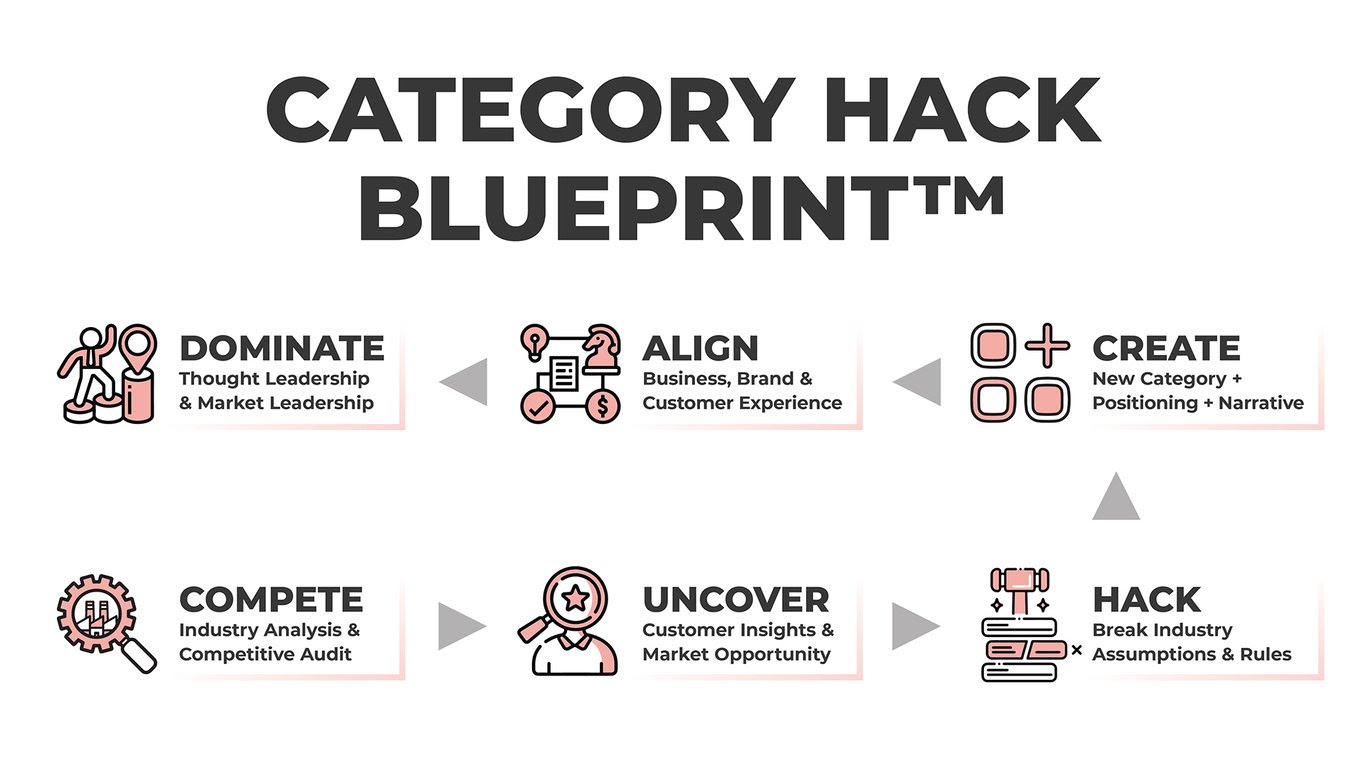
- Category Creation Over Competition: Rather than outspending rivals on ad impressions, high-growth firms are deploying frameworks like the Category Hack Blueprint™ to define entirely new market spaces.
- ASEAN Launchpad Imperative: For Malaysian SMEs targeting expansion across Singapore, Indonesia, and Vietnam, a brand-led digital ecosystem serves as the core infrastructure for regional trust and authority.
Across West Malaysia, business owners are pumping more capital into digital channels than ever before. Social media feeds are filled with high-frequency content, web agency retainers are expanding, and digital ad spending continues to climb. Yet, from manufacturing hubs in Shah Alam to technology firms in Petaling Jaya, a persistent frustration remains: margins are under pressure, pricing power is eroding, and customer acquisition costs continue to escalate.
Malaysian enterprises do not suffer from an execution deficit; they face an acute positioning crisis.
When every player in a sector, be it food production, engineering services, or higher education, uses similar templates, identical value propositions, and aggressive discount tactics, the customer’s decision matrix defaults to a single variable: price. To break out of this race to the bottom, forward-thinking organisations are abandoning the traditional “brochure website” in favour of brand-led digital ecosystems.
Strategic Shift: Generic Websites vs. Brand-Led Ecosystems
To scale across domestic and regional markets, businesses must shift their digital presence from a passive informational outlet to an active strategic asset.
| Strategic Attribute | Generic Digital Brochure | Brand-Led Digital Ecosystem |
| Primary Objective | Static visibility and lead capture | Category ownership and trust-building |
| Core Architecture | Template-driven pages and spec sheets | Tailored customer journeys & thought leadership platforms |
| Market Position | Competes within crowded, existing categories | Redefines or creates a distinct market category |
| Sales Engagement | Price-driven comparison and discounting | Value-driven authority and premium positioning |
| ASEAN Readiness | Limited cross-border trust or brand equity | Scalable digital asset built for regional expansion |
Defining the Uncomparable: The Category Creation Approach
The entry of Singapore-based branding consultancy Phoenix Design into Kuala Lumpur underlines this broader shift in corporate strategy. According to Managing Director Herry Ho, the primary barrier for Malaysian businesses is not a lack of operational capability or product quality, but a lack of strategic distinction.
“The most striking thing we’ve observed since entering Kuala Lumpur is not a lack of innovation. It is a lack of strategic distinction,” notes Herry Ho. “Many Malaysian businesses already possess the expertise, quality, and ambition required to compete across ASEAN. What is often missing is a clear category position that helps customers understand why they matter.”
Central to addressing this positioning gap is Phoenix Design’s proprietary Category Hack Blueprint™. Instead of asking how a firm can outperform competitors inside an established niche, the framework forces leadership teams to identify unmet market friction and build an entirely new category around their distinct capabilities.
When this strategic alignment occurs:
- Websites transform from digital business cards into interactive educational engines.
- Content shifts from promotional noise to high-value industry intelligence.
- Technology Spend directly reinforces core commercial goals rather than isolated marketing experiments.
Editor’s Take: The Strategic “Why”
For decades, the standard growth path for a Malaysian SME was straightforward: establish solid domestic operations, secure long-term industrial contracts, and gradually invest in incremental digital marketing. However, the rapid integration of the ASEAN economy and the rise of AI-driven commerce have upended this model.
Today, domestic buyers and regional procurement teams perform deep digital due diligence long before contacting a sales representative. If your digital footprint looks identical to five other vendors in Selangor or Penang, you are immediately commoditised.
Building a brand-led digital ecosystem is not an aesthetic upgrade—it is a defensive moat and a growth engine rolled into one. As Malaysian companies seek to capture market share across Indonesia, Vietnam, and Singapore, those that continue competing solely on operational cost will see their margins squeezed by lower-cost regional producers. Conversely, those that use strategic positioning to define their own category will command premium pricing, attract institutional capital, and set the standard for their industries across Southeast Asia.