

Key Takeaways
- Cross-Border Educational Infrastructure: The “ASEAN Guru Innovation Challenge” (ASEAN-GIC), backed by Maybank Foundation and the ASEAN Foundation, has launched a bilateral foster school programme pairing 11 Sarawakian schools with 11 regional ASEAN schools.
- Grassroots Institutional Funding: Administered by Kuching-based social enterprise WormingUp, the project leverages seed grants and technical training from local universities to help rural educators embed sustainability and agritech directly into their daily curricula.
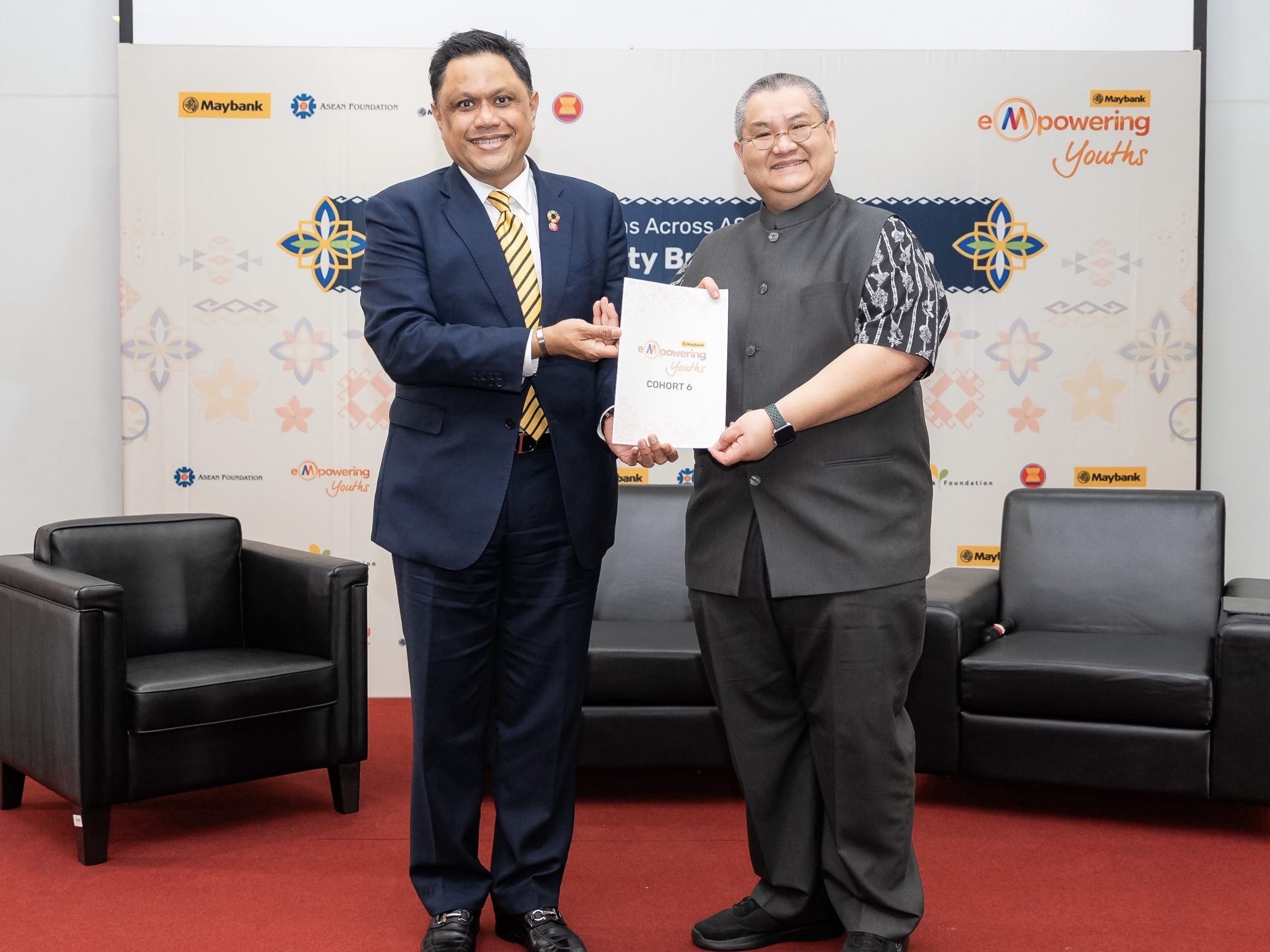
- Expanding Regional Volunteer Footprint: Coinciding with the UN International Year of Volunteers for Sustainable Development (IVY 2026), the initiative forms part of the eMpowering Youths Across ASEAN (eYAA) Cohort 6, which has expanded its active deployment to 110 volunteers following Timor-Leste’s formal inclusion.
As Malaysia accelerates its transition toward a climate-resilient, circular economy, the frontline of industrial transformation is quietly shifting to the classroom. While urban centers frequently benefit from private green initiatives, rural and resource-dependent communities, such as those across Sarawak, often experience an educational gap, struggling to integrate advanced sustainability and modern agricultural technology into routine school curricula.
To bridge this operational divide, Kuching-based accredited social enterprise Fly Technology Agriculture Sdn Bhd (WormingUp) has initiated Project ASEAN-GIC.
Funded via a USD 25,000 grant from the eMpowering Youths Across ASEAN (eYAA) Cohort 6 programme, a joint framework by Maybank Foundation and the ASEAN Foundation, the project shifts the focus of sustainability from abstract global climate metrics to practical, teacher-led classroom innovations.
Building the ASEAN–Sarawak Foster School Network
The core architecture of ASEAN-GIC is built around systemic peer-to-peer exchange rather than short-term fly-in volunteerism. Rather than relying on static textbook distribution, the initiative establishes a structured digital and operational link between local educators and regional peer systems.
Project ASEAN-GIC: Operational Deployment Matrix
[ 11 ASEAN Youth Volunteers ]
             │
             ▼
[ 11 Regional Partner Schools ] ◄── (Foster Programme) ──► [ 11 Sarawak Classrooms ]
                                                                   │
                                                                   ▼
                                                    [ Teacher Innovation Challenge ]
                                                                   │
                                                                   ▼
                                                    [ Seed Grants & Implementation ]
| Programme Pillar | Practical Execution Framework | Targeted Quantitative Impact | Primary Institutional Objective |
| Foster School Programme | Pairs 11 Sarawakian schools with 11 regional ASEAN counterparts, facilitated by 11 dedicated Youth Volunteers. | Direct engagement of 22 teachers and over 6,600 active students. | Normalises cross-border peer learning, digital exchange videos, and shared environmental problem-solving. |
| Teacher Innovation Challenge | A competitive pitch platform where local teachers design and defend classroom-integrated sustainability projects. | Top three regional concepts secure seed grants of RM2,500, RM1,500, and RM1,000. | Incentivises educators to develop custom, highly localized curriculum updates that can be tested over a 3-month cycle. |
| Academic Technical Training | Intensive proposal, program planning, and agritech workshops run by regional university hubs. | Direct training support delivered by UNIMAS, UCSI University, and Curtin University. | Equips rural educators with the technical grant-writing skills required to secure independent funding down the road. |
By anchoring the project through a live Sustainability Exhibition and Marketplace, complemented by public digital livestreams, the initiative is projected to reach an estimated 82,500 individuals via digital content channels, publicizing localized agritech methods far beyond the physical classroom.
The Geopolitical Context: Regional Expansion under IVY 2026
The deployment of eYAA Cohort 6 arrives during the United Nations-designated International Year of Volunteers for Sustainable Development. This landmark year marks a noticeable expansion in the operational reach of the Maybank-ASEAN Foundation alliance.
With Timor-Leste integrating into the fold as ASEAN’s 11th member state and Lao PDR joining as an active implementing country, the volunteer cohort has scaled up to 110 changemakers. These teams are tasked with executing 10 community-designed projects spanning environmental diversity, education, and social cohesion across eight member nations.
To ensure these capital injections deliver long-term value rather than temporary aid, the framework incorporates an Alumni Accelerator Programme. This sub-tier delivers specialized USD 2,500 scaling grants directly to veteran volunteer leaders, ensuring that the institutional knowledge gathered across previous cohorts remains active within the regional ecosystem.
Editor’s Take: The Strategic Why
The Macro View: Project ASEAN-GIC addresses a critical blind spot in how developing nations approach green transition strategies. High-level policy documents, such as Malaysia’s National Energy Transition Roadmap (NETR), frequently focus on massive utility-scale engineering shifts: hydrogen hubs, carbon capture systems, and large solar arrays. However, the human capital required to operate and sustain this new economy cannot simply be conjured overnight upon project completion.
In agricultural states like Sarawak, the transition to a sustainable economy depends on normalising smart resource management, waste circularity, and agritech concepts at a primary and secondary school level.
By bypassing top-down bureaucratic curriculum rewrites and putting seed capital directly into the hands of local teachers, Maybank and the ASEAN Foundation are treating educators as active regional developers. Over time, this decentralized approach builds the foundational talent pool required to meet Maybank’s ROAR30 sustainability targets, ensuring that rural communities drive the region’s green transition rather than being left behind by it.