

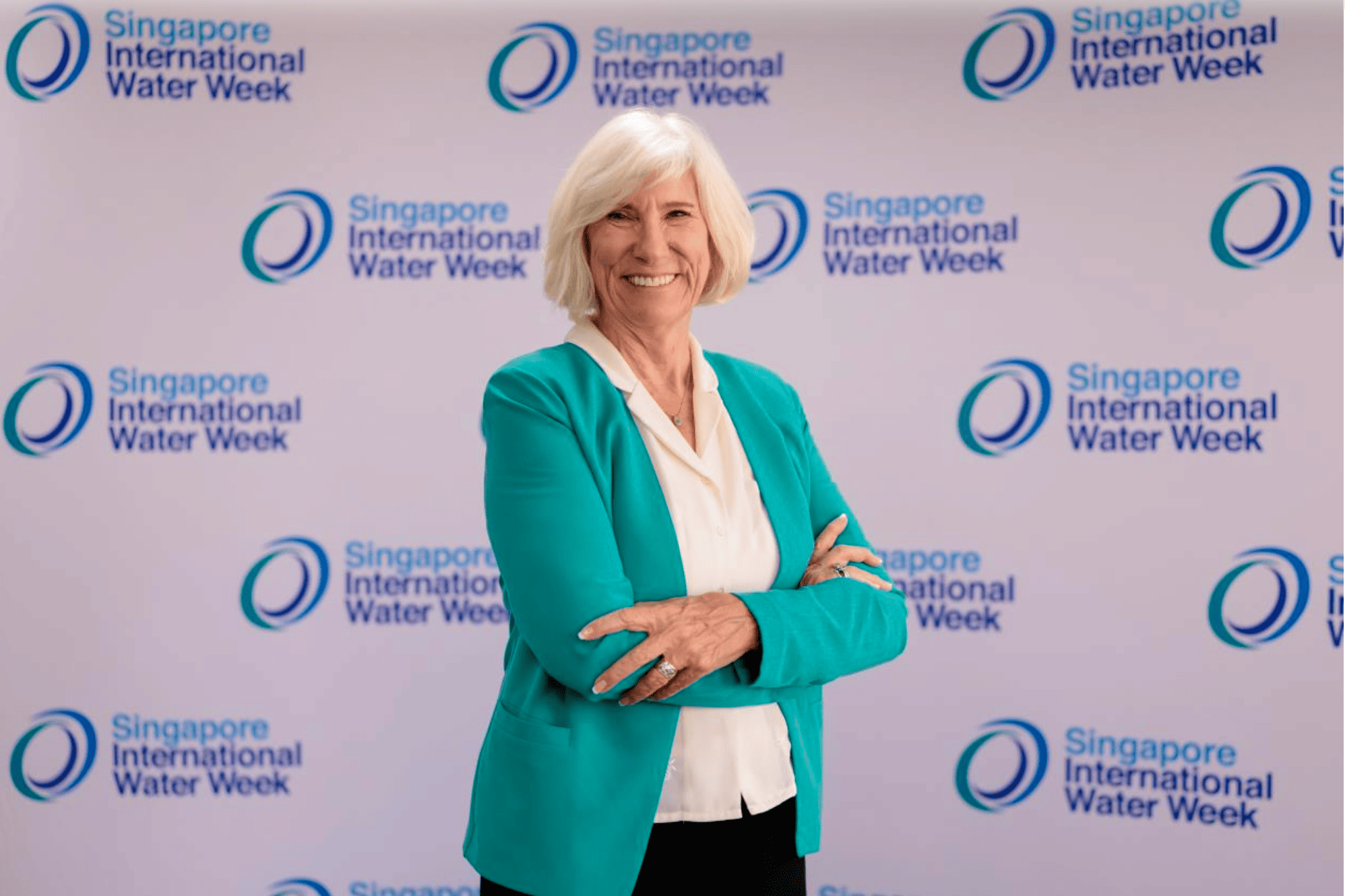
American microbiologist Professor Joan Bray Rose has been awarded the Lee Kuan Yew Water Prize 2026 for her pioneering work in Quantitative Microbial Risk Assessment (QMRA). As the 11th recipient of this prestigious accolade, Professor Rose is being recognised for transforming water management from a reactive “detect and correct” model to a proactive, science-based “predict and prevent” strategy.
Her breakthrough has not only shaped global drinking water standards but was also instrumental in the successful implementation of NEWater, Singapore’s third National Tap.
Uncovering the “Invisible” Crisis
Professor Rose’s work was catalyzed by the 1993 Cryptosporidiosis outbreak in Milwaukee, the largest waterborne disease outbreak in U.S. history, which affected over 400,000 people.
- The Discovery: She was the first to identify Cryptosporidium as a zoonotic pathogen capable of evading conventional water filtration and disinfection.
- The Systematic Shift: By developing QMRA, she enabled scientists to quantify infection risks based on pathogen concentrations and consumption patterns, filling a critical gap in public health monitoring.
From California to Singapore
The impact of QMRA extends far beyond theoretical research, serving as a foundational blueprint for modern water infrastructure and regulation.
| Region | Impact of QMRA Application | Strategic Outcome |
| Global Standards | Adopted by the US EPA and the World Health Organisation (WHO). | Defined treatment requirements based on tolerable health risks for any given source. |
| Singapore | Integral to the NEWater Expert Panel (1998–2002). | Ensured long-term safety and public confidence in recycled used water. |
| California & Australia | Guided Indirect and Direct Potable Reuse regulations. | Created global models for sustainable water reuse to address scarcity. |
The Singapore Connection: Beyond NEWater
Professor Rose’s relationship with Singapore spans over two decades, including chairing PUB’s External Audit Panel until 2019. Today, PUB utilizes the QMRA approach to:
- Proactive Monitoring: Identify potential risks within the treatment process rather than relying on “end-of-pipe” testing.
- Technology Evaluation: Evidence-based selection of advanced technologies like reverse osmosis, ozonation, and ultraviolet disinfection.
Editor’s Take:
A Resilience Blueprint for a Water-Scarce Era
For the Malaysian Business reader, Professor Rose’s work is a masterclass in Risk-Based Strategic Planning. As cities worldwide face evolving microbial threats and climate-induced water scarcity, the transition to QMRA-based “predictive” systems is no longer optional—it is the baseline for urban resilience. We offer our heartiest congratulations to Professor Rose for her 2026 laureateship and for a lifetime of work that continues to safeguard millions of lives.