

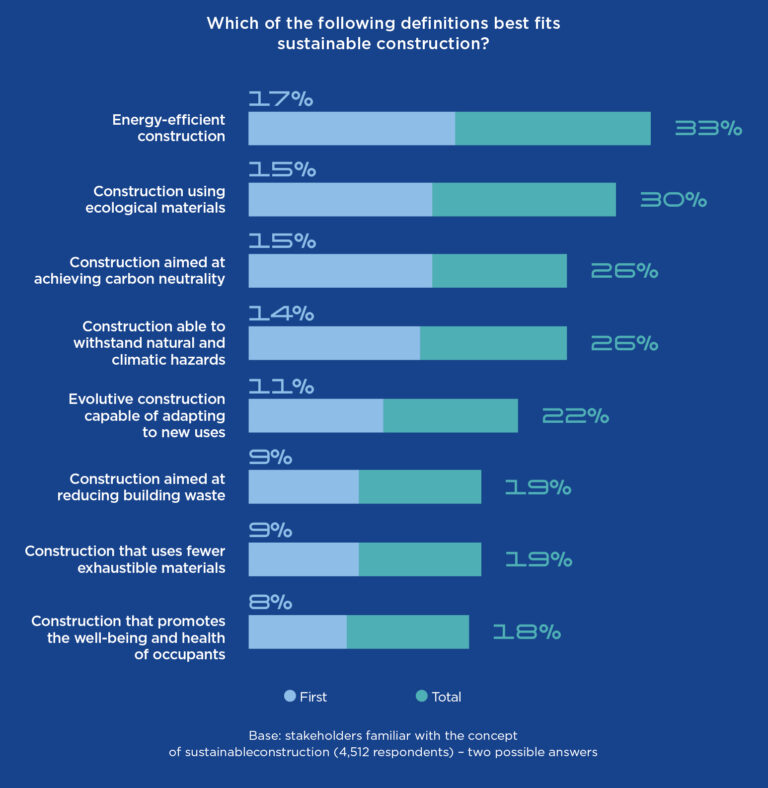
While the world talks about “net zero” as a distant target, the construction industry is currently in the middle of a massive identity crisis. Saint-Gobain’s 2026 Sustainable Construction Barometer, the fourth edition of this global pulse-check, has just dropped, and the data reveals that “green” is no longer just an elective; it’s a survival tactic.
The study, which surveyed 4,800 stakeholders and citizens across 30 countries (including Malaysia), shows that while we finally agree on what sustainable construction is, we are still arguing over who pays for it.
The “Resilience” Revolution
Forget just saving energy; the new buzzword is Resilience. For the second year running, the importance of a building’s ability to withstand climate hazards gained another 5 percentage points. This is particularly acute in Asia-Pacific, where 38% of stakeholders now view resilience as a non-negotiable part of the value chain. As extreme weather becomes the “new normal,” a building that isn’t resilient is effectively a liability.
The 47% Value Gap
Here is the kicker: 47% of stakeholders now believe sustainable construction creates more financial value than traditional methods. While that sounds like a win, it means over half the industry is still unconvinced. In Europe and Asia-Pacific, this “skepticism gap” is even wider, with only 38% in Asia-Pacific fully bought into the economic upside.
“Participation Trophies” for Students?
The report highlights a fascinating generational paradox. While 78% of students say they value training in sustainable construction, only 5% would categorically refuse a job offer from a company that isn’t committed to sustainability. It seems that while the younger workforce wants a green future, the reality of the job market still dictates their signatures.
The “Sovereign Intelligence” of Materials
In Asia-Pacific, the interest isn’t just in solar panels; it’s in biomaterials. 32% of respondents in the region cited biomaterials as a priority, significantly higher than the global average. This reflects a shift toward using “Sovereign Intelligence” (local, natural resources) to build regional infrastructure rather than relying on carbon-heavy imports.
Editor’s Take: The Price of “Almost”
For the Malaysian Business reader, the 2026 Barometer is a reality check. We are currently navigating RM18 billion in FDI into the Johor-Singapore Special Economic Zone (JS-SEZ), yet only 32% of professionals are routinely assessing their carbon footprints. We are building the future with the tools of the past.
The “Pikachu Collector” mentality, where we chase the flashiest new green tech but ignore the foundational “resilience” of our structures, has to stop. If nearly 1 in 3 stakeholders says the top priority is making sustainable materials more competitive, then our policy focus must shift from subsidies to scale. In a global economy growing at 3.1%, the winners won’t be those who build “greenest,” but those who build “smartest” by proving that a sustainable building is a more profitable asset.
GET THE FULL REPORT
Want to see how Malaysia stacks up against the “Elite 7” green nations? You can download the complete 2026 Sustainable Construction Barometer and the accompanying Action Paper at the official Saint-Gobain Sustainable Construction Observatory: saint-gobain.com/en/observatory/2026-sustainable-construction-barometer