

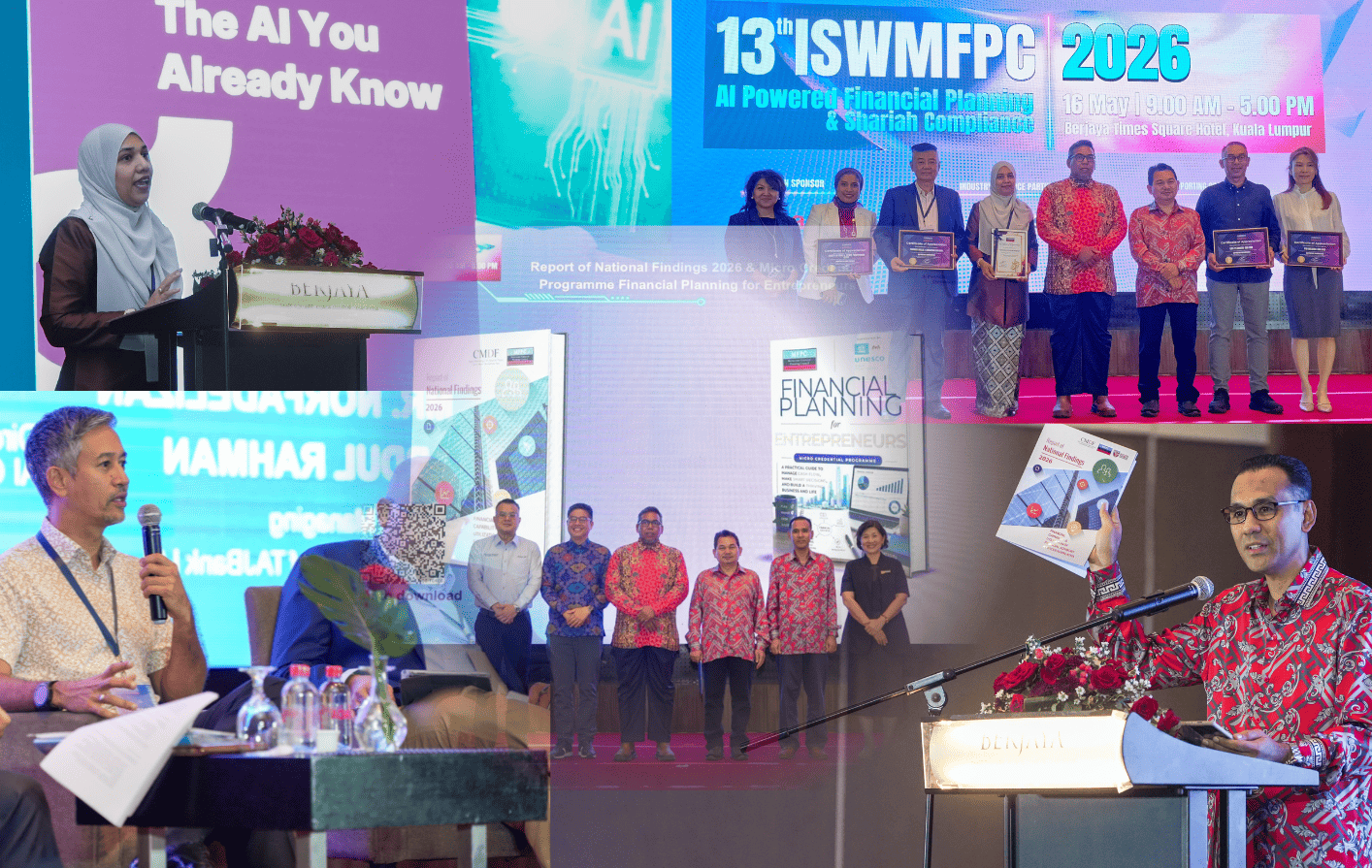
Setting the structural standard for automated Islamic fiduciary services, the Malaysian Financial Planning Council (MFPC) has concluded its 13th International Shariah Wealth Management & Financial Planning Conference (ISWMFPC) 2026.
The hybrid summit, staged at the Berjaya Times Square Hotel, brought together over 400 global financial practitioners, software architects, and state regulators to address a complex structural issue: ensuring ironclad Shariah compliance in an era of rapid AI automation.
Operating under the theme “AI Powered Financial Planning & Shariah Compliance”, the conference provided a vital platform for discussions between alternative asset managers like Kenanga Investors Berhad and digital-first pioneers like Wahed. The key objective was mapping out how machine learning algorithms can automate complex wealth management tasks, such as dynamic portfolio purification and real-time inheritance tracking, without violating core Islamic jurisprudence (Fiqh al-Muamalat).
The AI-Shariah Governance Framework: Balancing Speed and Compliance
The introduction of large language models and automated robo-advisory engines to financial planning introduces a layer of technological risk. If an AI agent recommends a high-yield product that contains elements of hidden interest (riba) or excessive uncertainty (gharar), the financial institution faces immediate regulatory penalties and a loss of market trust.
To prevent this, delegates at the conference mapped out a specialized, multi-tiered approach to algorithmic Shariah compliance:
| Operational Tier | Core Technological Anchor | Active Shariah Safe-Harbor Function | System Deployment Partners |
| Tier 1: Smart Portfolio Purification | Real-Time Cashflow & Dividend Scrubbing Engines | Automatically calculates and isolates non-halal dividend income elements, redirecting them to approved charities. | Wahed / Eq8 Capital |
| Tier 2: Automated Estate Planning | Mirath-Engine Smart Contracts | Uses deterministic, rule-based algorithms to map Islamic inheritance law (Faraid) directly to user asset profiles. | Goldfarmer / STEP Malaysia |
| Tier 3: Algorithmic Oversight | Natural Language Processing (NLP) Compliance Auditing | Continuously monitors automated client advice against active guidelines issued by the Securities Commission (SC). | National AI Office (NAIO) / reAINmaker |
The Diagnostic Baseline: Launching the 2026 National Findings Report
A major highlight of the conference was the official presentation of the Report of National Findings 2026. Funded by the Capital Market Development Fund (CMDF), this definitive research project provides an in-depth assessment of the financial capabilities of Malaysian consumers and their active utilization of professional wealth advisory networks.
[Low Financial Capability Baseline] ──► Fragmented Retail Allocations ──► High Exposure to Market Volatility
                                                                                        │
                                                                                        ▼
High Capital Instability

[MFPC Modular Micro-Credentials]   ──► Targeted Professional Upskilling ──► Institutional Compliance Alpha
                                                                                        │
                                                                                        ▼
                                                                             Sovereign Wealth Security
The report’s diagnostic insights served as the direct catalyst for MFPC’s concurrent launch of its new Micro-Credential Modules. Designed as bite-sized, specialized training courses, these modules allow Registered Financial Planner (RFP) and Shariah RFP holders to rapidly upskill in high-demand technical areas, such as Islamic estate law and automated wealth-tech management, ensuring the local workforce remains competitive in an increasingly digital landscape.
Strategic Outlook: Subsidizing the Talent Lifecycle
To ensure these advanced professional qualifications remain highly accessible, MFPC confirmed that its flagship RFP and Shariah RFP programs have maintained full HRD Corp claimable status. Additionally, working professionals looking to transition into high-yield wealth management paths can directly finance their tuition fees through EPF Account 2 educational withdrawals.
Backed by Diamond Sponsor Kenanga Investors Berhad, this funding pathway ensures that Malaysia continues to build a deep, continuous pipeline of certified financial advisors capable of handling complex wealth portfolios.
Editor’s Take: Managing the ‘Complexity Tax’ of Algorithmic Advisory
For the Malaysian Business reader, the core insights from ISWMFPC 2026 underscore a vital economic reality: the integration of AI into asset management is no longer a futuristic luxury; it is a baseline requirement to protect operating margins. For decades, wealth managers have accepted a heavy “Complexity Tax” spending hundreds of billable hours manually cross-referencing global equities against Shariah screeners and calculating intricate inheritance allocations.
True industry leadership requires Productivity Realism. Turning these manual compliance tasks over to automated, AI-driven engines is the only way for firms to scale their operations.
This strategy carries major lessons for our wider financial ecosystem as we implement the Securities Commission’s newly unveiled Capital Market Masterplan 2026–2030.
To maintain Malaysia’s status as the definitive global capital hub for Islamic finance, our institutions must move beyond basic financial products. We need to create intelligent, automated ecosystems that combine algorithmic speed with ironclad ethical parameters.
Whether tracking MBSB Bank’s automated SME stabilization relief systems or evaluating digitized global supply chains across the GBA corridors, the core imperative is identical: eliminate operational friction. MFPC’s focus on AI-driven compliance provides the exact blueprint our financial sector needs, proving that firms that master ethical automation will capture “Compliance Alpha” and secure long-term market dominance.