

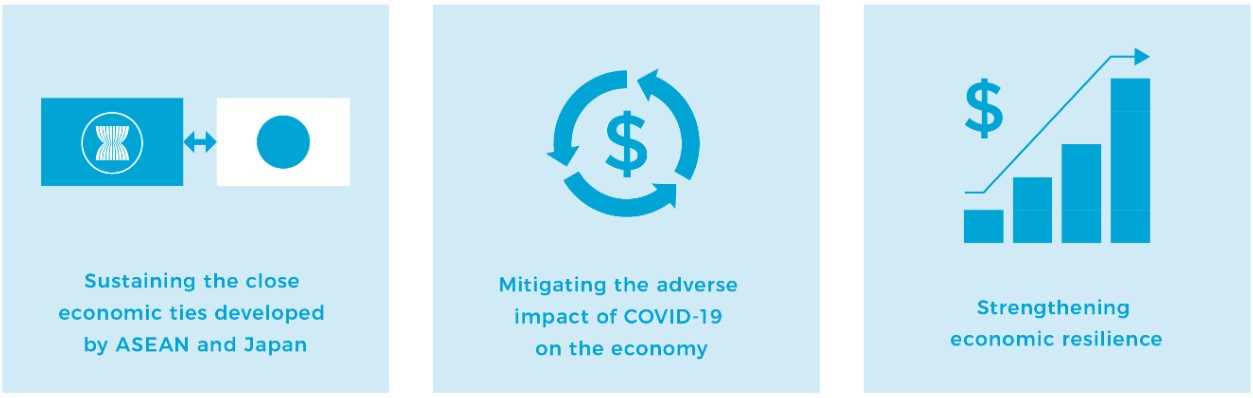
Executing a fundamental shift in its geopolitical economic strategy, the Government of Japan has formalized an active public-private execution model across Southeast Asia via the Dialogue for Innovative and Sustainable Growth (DISG). Following its initial establishment via the Japan-ASEAN Economic Ministers’ Meeting, the platform is accelerating its shift from policy dialogue to operational project deployment. This operational push is anchored by the appointment of Masuo Kuremura (former Executive Secretary to Japan’s Minister of Economy, Trade and Industry (METI) and current Executive Director of JETRO Singapore) as DISG Chairman.
This structural realigning marks the death of the legacy 1980s economic blueprint, which treated ASEAN strictly as a low-cost, one-way manufacturing base for Japanese industrial exports. Under a newly updated “Co-Creation” policy framework, Japan is pooling its technological assets with ASEAN’s market scale across 13 core regional economic organizations, including the Japan External Trade Organization (JETRO) and the ASEAN Business Advisory Council (ASEAN-BAC).
The strategy aims to establish a self-regulating public-private loop designed to accelerate infrastructure deployment, secure supply chains, and build sovereign technological alternatives amidst intense U.S.-China trade tensions.
The Four Pillars of Economic Insulation
The platform’s operational deployment maps directly to four structural shifts designed to counter global macroeconomic volatility and regional supply risks:
 [FRAGILE OUTSOURCING] ──► Low-Cost Export Rerouting ──► Tariff Exposure & Severe Resource Bottlenecks
                                                                         │
                                                                         ▼
                                                        Systemic "Complexity Tax"

 [DISG CO-CREATION RIG] ──► Public-Private Fast-Tracks ──► Sovereign LLMs & Resilient Supply Networks
                                                                         │
                                                                         ▼
                                                    Autonomous "Resilience Alpha"
1. Upstream Supply Chain Autonomy
As geopolitical friction and shifting tariff rules make simple export-rerouting strategies obsolete, DISG is prioritizing internal industrial upgrades within ASEAN economies.
The framework focuses heavily on securing the critical processing stages of advanced manufacturing, specifically upstream capacities in rare earth elements and rare metals, to create a fully autonomous regional supply ecosystem.
2. Sovereign Computing and Localized AI
While large-scale investments by global hyper-scalers continue to expand across Malaysia, Indonesia, and Singapore, DISG is addressing a long-term economic security concern: the concentration of raw computing power within a small group of major powers.
As highlighted during the 3rd Japan-Singapore Economic Dialogue (JSED), Japan is leveraging its deep semiconductor foundations to partner with local software ecosystems. The goal is to develop smaller, locally-optimized Large Language Models (LLMs) that accurately match the specific linguistic, cultural, and regulatory requirements of individual ASEAN economies.
3. Open Innovation Platforms: The Fast-Track Pitch
To bridge the gap between state-level policy and street-level commercial deployment, DISG has deployed its flagship “Fast Track Pitch” initiative. This open-innovation system bypasses typical bureaucratic procurement delays, connecting established Japanese corporations directly with high-growth ASEAN startups to co-develop solutions for regional social challenges.
Throughout the current fiscal cycle, these open-pitch operations have successfully scaled localized expansions across Singapore, Vietnam, Malaysia, and Indonesia.
4. The Pragmatic Energy Transition (AZEC Layout)
Recognizing that strict, European-style green mandates often fail to account for the energy demands of rapid industrialization, Japan is promoting a highly pragmatic route to decarbonization via the Asia Zero Emission Community (AZEC).
The strategy combines advanced Japanese technologies, such as hydrogen and ammonia co-firing solutions, with existing gas-fired power networks. This approach lowers overall carbon output while actively protecting regional grid stability and maintaining affordable access to electricity.
Strategic Outlook: Building a Non-Speculative Model of Capitalism
Commenting on the platform’s transition to in-person operations, DISG Chairman Masuo Kuremura emphasized that Japan’s long-term competitive edge lies in reliable, high-yield execution that focuses on structural asset value rather than short-term cost reduction.
       [MULTIPOLAR PRIVATE CAPITAL] (Startup Alliances / Fast-Track Entrants)
                                  ▼
       [SYSTEMIC POLICY NECK]      (4-Pillar Rules-Based Free Economic Framework)
                                  ▲
       [SOVEREIGN RESILIENCE BASES] (AZEC Grids, Upstream Critical Mineral Sites)
By explicitly linking the startup ecosystems of Japan and ASEAN through free-trade frameworks like the CPTPP and RCEP, the initiative aims to build a sustainable economic model. This setup balances corporate growth with real-world social problem-solving, intentionally relying on technical interoperability rather than large-scale, speculative state financial subsidies.
Editor’s Take: Driving Productivity Realism Across ASEAN Corridors
For the Malaysian Business reader, Japan’s restructured DISG strategy delivers a vital lesson in Ecosystem Realism: in a fragmented global trade environment, long-term operational resilience belongs entirely to the networks that control their foundational inputs. For years, regional corporate leaders have accepted a heavy “Complexity Tax” by building businesses that rely entirely on highly volatile foreign inputs, vulnerable data storage chains, and unstable fossil-fuel grids.
True market leadership requires active structural participation.
Firms can no longer afford to view cross-border economic cooperation merely as a tool for short-term cost cutting or simple trade matching.
This reality carries major lessons for our wider industrial planning as we coordinate trade networks under the 13th Malaysia Plan. To shift local enterprises into high-value global tiers, our corporate boards must align their asset strategies with robust, secure regional frameworks.
Whether tracking Alpro Group’s structured primary care networks lowering corporate health overheads or analyzing Berjaya Air’s vertical integration strategy using the world’s first all-business ATR HighLine aircraft, the core priority remains identical: eliminate operational friction.
By actively leveraging DISG’s Fast-Track innovation loops and participating in localized, sovereign technical infrastructure developments, Malaysian businesses can successfully bulletproof their supply chains and capture long-term competitive advantages on the global stage.