

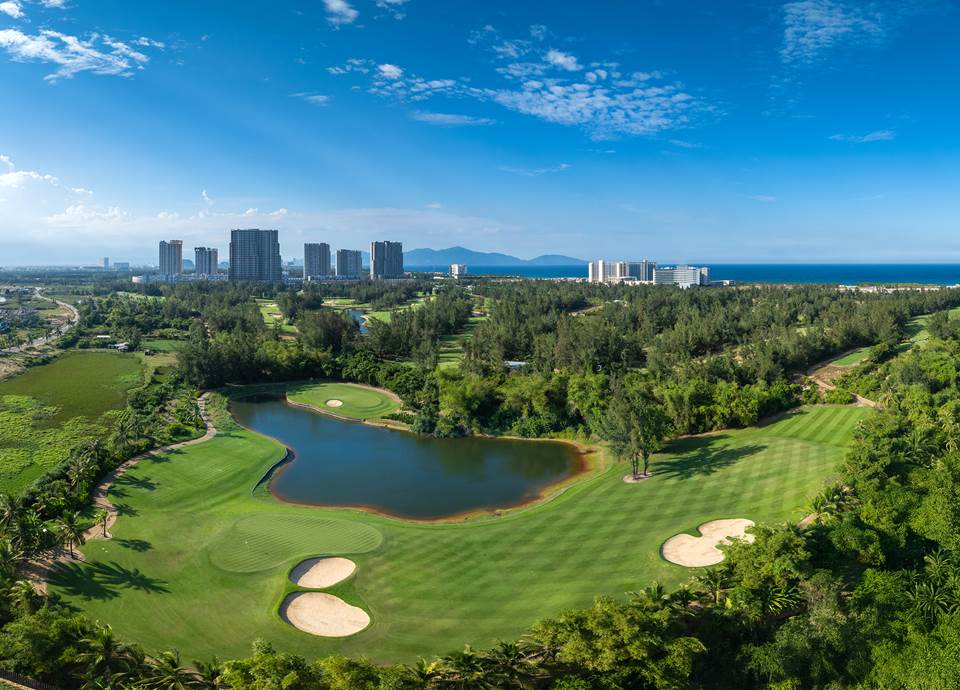
Executing a highly targeted cross-border marketing maneuver, the Vietnam Golf Coast (VGC) alliance has deployed its senior leadership to Malaysia to capture a larger share of the outbound premium sport tourism market.
Staged before an audience of nearly 100 travel agents, trade operators, and corporate media representatives at the Kuala Lumpur Golf & Country Club (KLGCC), the destination showcase introduced an integrated suite of all-inclusive luxury golf and resort packages.
The campaign focuses heavily on Central Vietnam’s premier geography specifically the Da Nang–Hue–Hoi An corridor.
This trade push marks a significant shift in regional destination marketing. Rather than promoting individual clubs in isolation, the VGC initiative operates as a consolidated public-private marketing engine. By combining championship golf assets with high-end international hospitality brands, the alliance addresses a key market opportunity: the rising demand among affluent Malaysian golfers for high-quality, short-haul luxury travel that balances premium sport with high-end leisure.
The Architecture of Connectivity: Monopolizing the Short-Haul VIP Segment
The strategic decision to focus on the Malaysian market relies on strong macroeconomic alignments. High-net-worth golfers in Kuala Lumpur have long tolerated a hidden “Complexity Tax” when planning international golf excursions. This friction stemmed from uncoordinated flight schedules, volatile regional green fees, and fragmented ground transportation logistics that disrupted the premium travel experience before guests even arrived at the first tee.
 [ FRAGILE ISOLATED BOOKINGS ] ──► Split Tee-Times & Variable Transit Tariffs ──► Disjointed Itineraries & High Friction
                                                                                               │
                                                                                               ▼
                                                                                   Systemic Logistics Tax

 [ VGC INTEGRATED PLATFORM ]   ──► 8 Championship Courses + Fixed B2B Contracts ──► Closed-Loop Stay-and-Play Value
                                                                                               │
                                                                                               ▼
                                                                                   Sovereign Yield Protection
The VGC platform removes this friction by presenting Central Vietnam as a single, easily accessible luxury playground. Backed by steady direct flight connections into Da Nang International Airport, stable seasonal pricing, and a highly secure regional environment, the VGC framework leverages an impressive cluster of eight world-class courses located in close geographic proximity.
This geographical layout allows travelers to play across distinctly different terrains, such as Sir Nick Faldo’s rugged coastal layout at Laguna Golf Lăng Cô, Colin Montgomerie’s traditional links design at Montgomerie Links, and Luke Donald’s dramatic montane course at Ba Na Hills Golf Club, all within a single, four-day trip.
Ecosystem Realism: Extending the Tourist Lifetime Value Curve
To capture maximum value from the Malaysian market, VGC operators are shifting their strategies past basic point-of-sale green fees. As detailed during the KLGCC briefing by Alice Le, Club Manager of Montgomerie Links, and Nancy Dang, Assistant DOSM of Ba Na Hills Golf Club, the alliance is actively bundling golf with premium lifestyle assets to capture greater consumer spend.
                         [ DISCRETIONARY HIGH-NET-WORTH LIQUIDITY ]
                                             ▼
                       [ DIRECT CORRIDOR VIA DANANG INT'S AP ]
                                             ▲
[MULTI-TERRAIN FAIRWAY CLUSTER] (Links Terrain, Parkland, Mountain Courses)
                                             │
                                             ▼
     [ CLOSING EXPERIENTIAL LOOPS ] (UNESCO Cultural Ties, Premium Beach Resorts)
By explicitly linking stay-and-play packages with high-end beachfront properties, premium dining, and proximity to cultural highlights like the UNESCO-listed ancient town of Hoi An, VGC has successfully extended the average stay of visiting golf groups to around four days.
To secure trade partnerships, the alliance backed its destination presentation with fixed B2B pricing structures for travel agents covering an extended five-month booking window. This approach shields local agencies from sudden price fluctuations and provides a reliable framework for packaging high-margin luxury itineraries.
Editor’s Take: Asset Alliances and the Reality of Shared Destination Power
For the Malaysian Business reader, the Vietnam Golf Coast’s deployment in Kuala Lumpur delivers a vital lesson in Ecosystem Realism: in an increasingly competitive service economy, standalone brands that refuse to cooperate regionally accept a high risk of being outpaced by consolidated corporate alliances. For years, the regional tourism and recreation sectors have paid a heavy “Complexity Tax” relying on individual, uncoordinated marketing efforts that struggle to sustain long-term international consumer interest.
True market leadership requires building unified ecosystem plays.
By pooling their assets under a single, cohesive destination banner, these competitive Vietnamese courses have successfully transformed their individual fairways into a powerful, collective regional asset.
This strategic alignment offers a highly effective model for our local business community as we design growth strategies under the 13th Malaysia Plan and advance service targets under the New Industrial Master Plan (NIMP 2030). To capture maximum yield from affluent global travelers, Malaysian business captains must look past fragmented service models.
Whether tracking Berjaya Air’s vertical integration using the world’s first all-business ATR HighLine fleet to serve luxury resorts, evaluating Resorts World Genting’s deployment of premium DENZA EV shuttle networks to elevate guest comfort, or monitoring Alpro Group’s subscription networks streamline care delivery, the ultimate goal remains identical: eliminate operational friction.
By co-designing integrated luxury ecosystems, anchoring fixed B2B value chains, and offering premium consumer experiences, corporate leaders can successfully capture high-margin market shares, insulate their operating returns, and secure an enduring competitive advantage on the global leisure stage.