

Strategic Takeaways
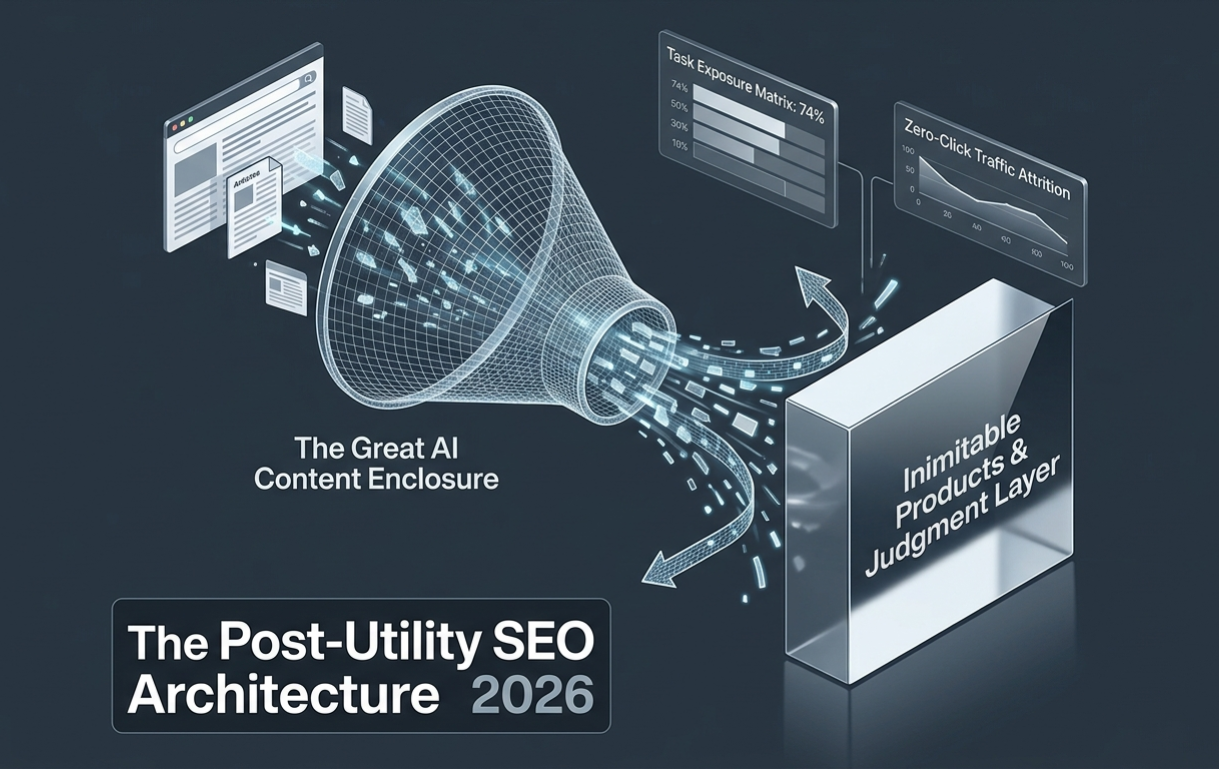
- The High-Exposure Boundary: Analytical correlations with the MIT task automation dataset reveal that standard content creation and basic search tasks face up to a 74% exposure level to automated systems, forcing organizations to rethink the economic value of traditional SEO positions.
- The Zero-Click Enclosure Mechanism: Mainstream search platforms are aggressively moving away from sending direct outbound traffic, instead extracting core information from websites to supply immediate answers, which significantly cuts traditional click-through volume.
- The Gated Leverage Dilemma: Publishers attempting to defensively block machine learning crawlers are finding that the traffic penalty occurs immediately, while the long-term leverage needed to negotiate content-licensing revenue remains highly unequal.
Shifting digital publishing away from the legacy “make great content” playbook, Search Engine Journal’s latest diagnostic analysis of MIT automation research outlines an intense structural crisis for digital strategists. The long-standing rule that high-quality informational text guarantees organic search visibility is collapsing under what is being termed “the great digital enclosure of publishing”.
The industry analysis looks directly at research from MIT’s Pierre Bouquet, whose task-automation mapping confirms that the core content tasks defining traditional marketing are precisely the ones most exposed to automated systems.
The Search & AI Asset Integration Grid
| Key Operational Dimension | Traditional Utility SEO | The Inimitable Product Architecture |
| Asset Scale & Horizon | Indexing & Click Volumes Optimizing for search queries that drive traditional web traffic and digital clicks. | The Enclosure Defense Layer Creating unique value that cannot be cleanly extracted or summarized away by LLMs. |
| Value Interface | Commoditised Text Production Relying on informational guides exposed to immediate generative automation. | Irreplaceable Human Judgment Anchoring output in original research, expert perspective, and unique data structures. |
| Risk Management Vector | Sovereign Platform Dependency Absolute vulnerability to shifting search layouts and model training extraction behaviors. | Direct Platform Leverage Building audience ownership across off-site platforms to drive direct engagement. |
As search engines shift from classic web indexing to direct answer extraction, digital teams face a stark choice: automate commoditized production entirely or completely shift their capital toward building asset classes that software cannot replicate.
For modern enterprises, the problem is no longer about scaling content volume, but about defending digital surface area from model extraction. As click-through rates decline for purely informational queries, publishers are being forced to accept a difficult reality—if a piece of content can be entirely summarized by an AI assistant, it no longer has a viable economic reason to exist in the open click economy.
 [ UTILITY SEO PLAYBOOK ] ──► Algorithmic Scraping ──► AI Overview Extraction ──► Zero-Click Attrition
                                                                                       │
                                                                                       ▼
                                                                         Systemic Traffic Valuation Drag

 [ INIMITABLE ASSET MODEL ] ──► Proprietary Research ──► Human-in-the-Loop Judgment ──► Owned Audience Conversion
                                                                                       │
                                                                                       ▼
                                                                         Defensible Brand Equity Insulation
Dissecting the Core Architecture: Task Automation Meets Content Defensibility
- 1. The Inimitable Product Strategy: To survive the shift toward answer extraction, organizations must transition from writing standard informational guides to developing unique digital assets. This requires anchoring all published materials in proprietary research, direct community engagement, and complex human perspectives that scrapers cannot effectively mimic or capture.
- 2. The Shift in Platform Execution: Rather than building content solely for owned properties that are highly vulnerable to scraping, modern distribution strategy requires a dual approach. Digital teams must build audiences directly on third-party channels and use that engagement to generate interest in products and communities that cannot be automated away.
Editor’s Take: Anchoring Content Value Within Productivity Realism
From the perspective of regional operational strategy and Productivity Realism, the structural breakdown detailed in the MIT automation analysis carries an essential truth for the enterprise landscape: any digital strategy that relies on mass-producing generic information is an active waste of corporate capital. For too long, organizations have treated text production as a simple volume game, building huge libraries of standard informational pages without realizing that these exact structures are the easiest for modern language models to absorb and replace.
True competitive edge requires tying content creation to unique, defensible knowledge assets.
As search traffic dynamics change, business leaders must stop funding standard utility writing and focus instead on capturing un-scrapable operational realities.
This push to maximize system value and remove unnecessary administrative drag is visible across multiple tracked sectors:
- Sime Darby Property Shifts Gear to Industrial, Logistics Segment, building advanced, logistics hubs designed to lock in long-term supply chain predictability.
- Gentari Drives Utility-Scale Renewable Rollouts to Anchor Green Foreign Direct Investment, scaling up smart utility infrastructure to eliminate carbon drag for heavy industrial clients.
- SKYWORTH Solar Accelerates Thailand Expansion as Part of New Global Growth Strategy, deploying funded, distributed energy systems to insulate commercial clients from rising utility grid tariffs.
The underlying corporate goal remains identical: eliminate operational drag.
By prioritizing direct audience relationships, utilizing proprietary corporate data, and eliminating high-exposure manual tasks, forward-thinking companies can protect their long-term growth, preserve their digital visibility, and secure an enduring advantage across a changing economic landscape.