

Strategic Takeaways
- The Sovereign Processing Footprint: The Johor expansion increases Alibaba Cloud’s global network to 104 availability zones across 32 regions. Crucially, the local facilities feature dedicated compute systems that keep data analysis in-country, helping financial institutions and government agencies meet strict local data compliance rules.
- The H2 2026 Agentic Software Rollout: Moving beyond basic server storage, Alibaba Cloud will introduce a specialized enterprise AI toolkit to Malaysia in the second half of this year. The software suite includes AgentRun for building large-scale corporate assistants, ACS Agent Sandbox for secure hardware isolation, and an AI-driven Agentic SOC safety operations system.
- The Local Partner Network Base: Since entering the Malaysian market in 2017 with its first twin data centers, Alibaba Cloud has onboarded a network of more than 300 local system integrators, distributors, and technology partners, using focused training programs to scale digital capabilities across the business ecosystem.
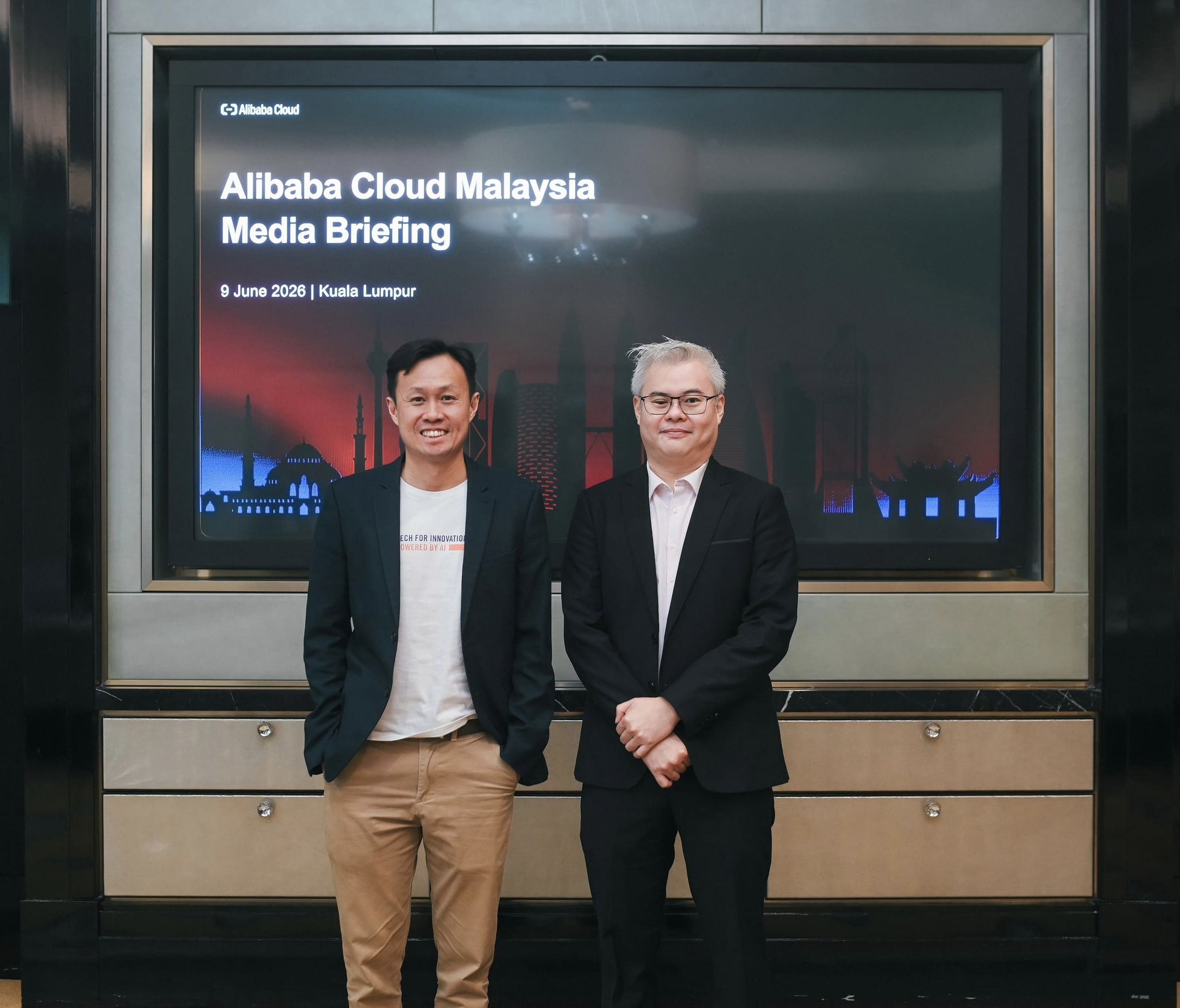
Strengthening Southeast Asia’s position as a major hub for advanced digital infrastructure, Alibaba Cloud has launched its new public cloud region in Johor, Malaysia.
The expansion, featuring two newly built data centers, brings the provider’s total asset footprint in the country to five active facilities marking its largest physical infrastructure base in Southeast Asia to date.
The launch forms a key part of Alibaba’s global USD 53 billion infrastructure investment plan.
It introduces purpose-built local processing centers to support corporate AI adoption, while keeping data handling compliant with strict regional data residency rules.
The physical expansion points to a clear trend under Productivity Realism: long-term enterprise efficiency requires moving past basic remote server storage and building local, high-speed hardware grids tailored for machine learning. By positioning this public cloud region in Johor, Alibaba Cloud achieves a strategic dual purpose.
It provides low-latency computing power to handle heavy corporate workloads for both Malaysian enterprises and nearby Singaporean networks.
At the same time, it deploys dedicated local computing systems that allow companies to process complex AI tasks without routing sensitive customer data outside domestic borders.
Ecosystem Synergy: Deep Tech Integrations and Enterprise Scale
The launch event highlighted several key partnerships showing how different industries are adopting local cloud infrastructure:
1. Financial Ecosystem Scaling: TNG Digital Sdn Bhd (TNGD), operator of Malaysia’s dominant financial services and lifestyle app, TNG eWallet, has moved its data architecture onto a unified cloud platform. By centralizing its data structure, the provider speeds up search and recommendation features for its users, while simplifying back-end maintenance as its digital services scale.
2. Localized Language Model Innovation: YTL AI Labs has deepened its partnership with Alibaba Cloud’s development teams to expand its ILMU family of models. Built on local infrastructure, these models are fine-tuned for Malay-language processing across text, image, and voice. This allows the team to run complex AI assistants across sensitive business areas through the specialized ILMU API Platform.
3. Streamlining Automated Creative Studios: Digital video platforms Morphyx.io and TabSpace.ai are embedding advanced generation models (including Wan2.7 and Qwen LLM) directly into their production pipelines through the provider’s Model Studio. This integration allows creative agencies to automate script translations, voice workflows, and video creation, reducing asset turnaround times and cutting production costs.
Editor’s Take: Anchoring Regional Operations via Productivity Realism
From the clear perspective of infrastructure economics and Productivity Realism, Alibaba Cloud’s massive investment in Johor emphasizes a fundamental truth for modern business development: true operational agility and cost control belong entirely to enterprises that anchor their software systems to secure, locally run infrastructure. For too long, expanding companies have viewed cloud migration as a simple technical shifting of files, overlooking how data latency, rising computing costs, and sudden cross-border data transfer rules can interrupt customer services and impact core operating margins.
True corporate leadership requires treating cloud infrastructure as a strategic foundation for business growth.
By running AI models locally to optimize token pricing and clear data compliance hurdles, technology leaders are showing how to scale digital operations efficiently without sacrificing data safety.
This model of building secure, localized tech setups provides an excellent operational guide for regional managers as they update workflows to support advanced automation and handle shifting international data policies.